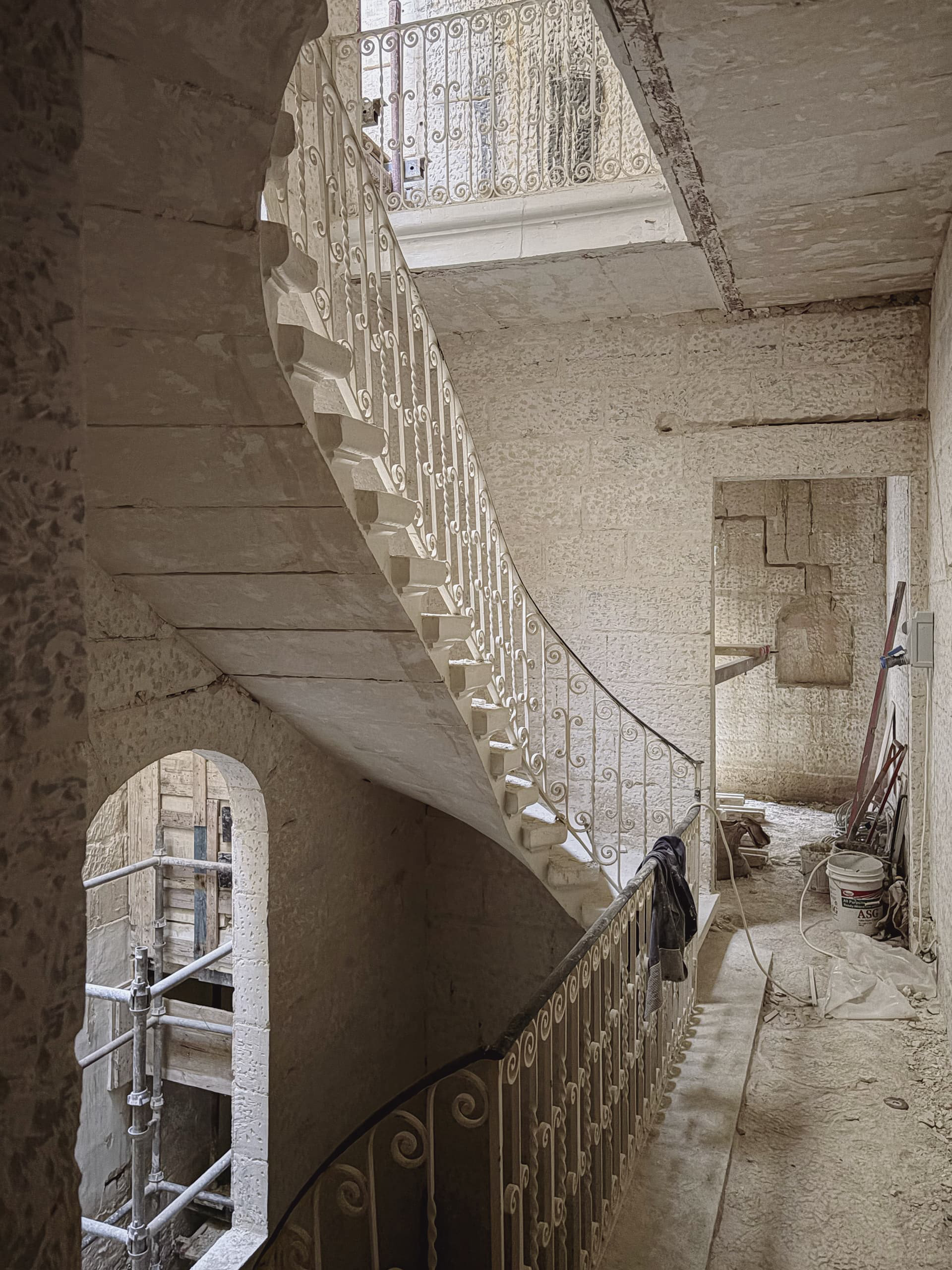
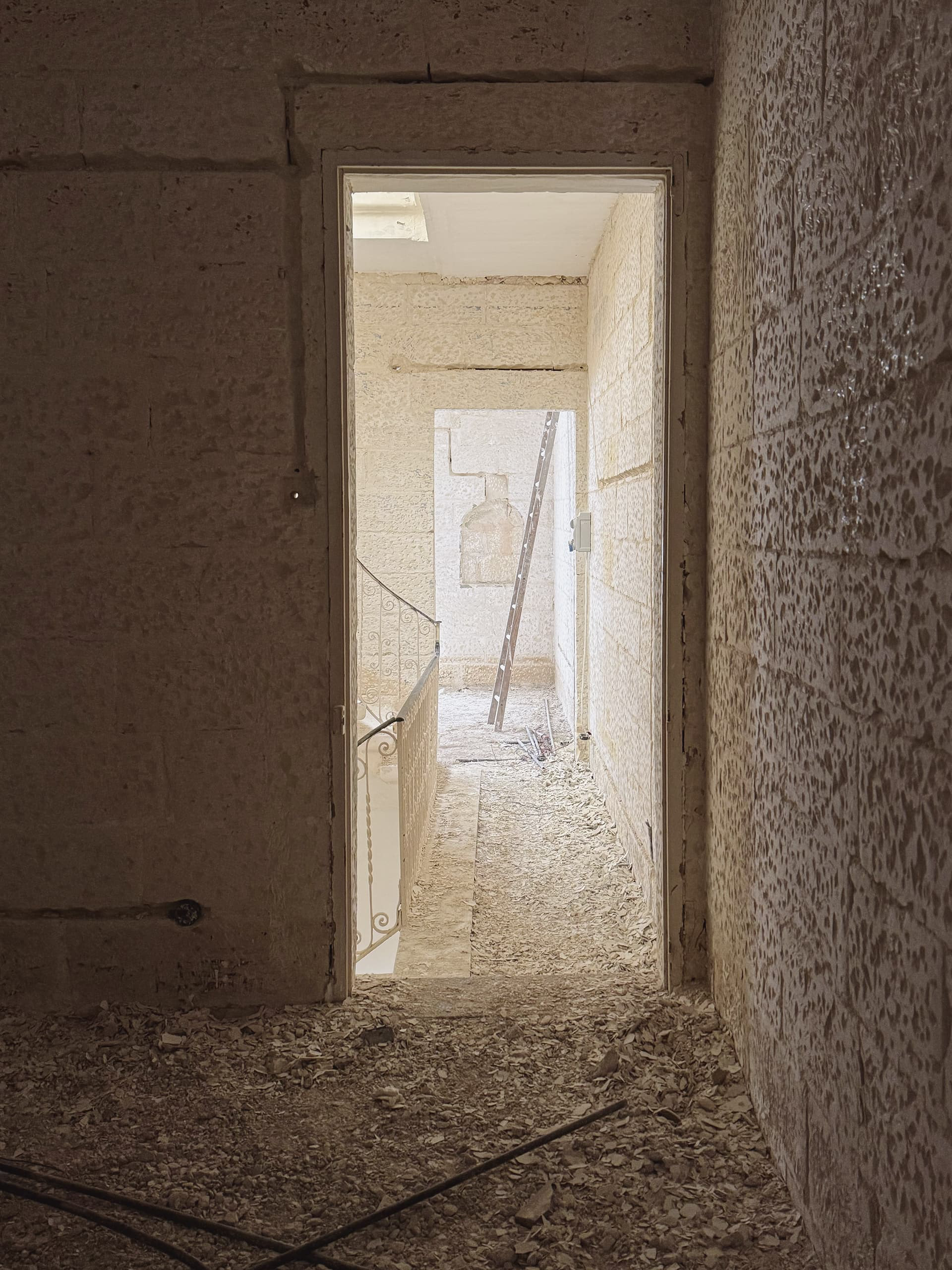
Currently under construction, this project involves the restoration and transformation of a historic townhouse in Sliema, Malta. The property forms part of a unique row of five houses commissioned by the same family at the turn of the twentieth century. Together with its immediate neighbour, it remains one of the last properties within the row to retain its original configuration, having avoided the subdivision and conversion that have transformed many similar townhouses over time.
The design approach is guided by a desire to reveal and strengthen the building's existing qualities while carefully adapting it for contemporary living. Rather than imposing a new architectural language, the intervention seeks to establish a dialogue between the original structure and a series of precise contemporary insertions.
Upon entering the house, visitors are welcomed by the restored ornamental ceilings and generous proportions characteristic of traditional Sliema townhouses. Along the entrance hall, a series of carefully articulated vertical openings provide the first indication of the architectural transformation taking place deeper within the building.
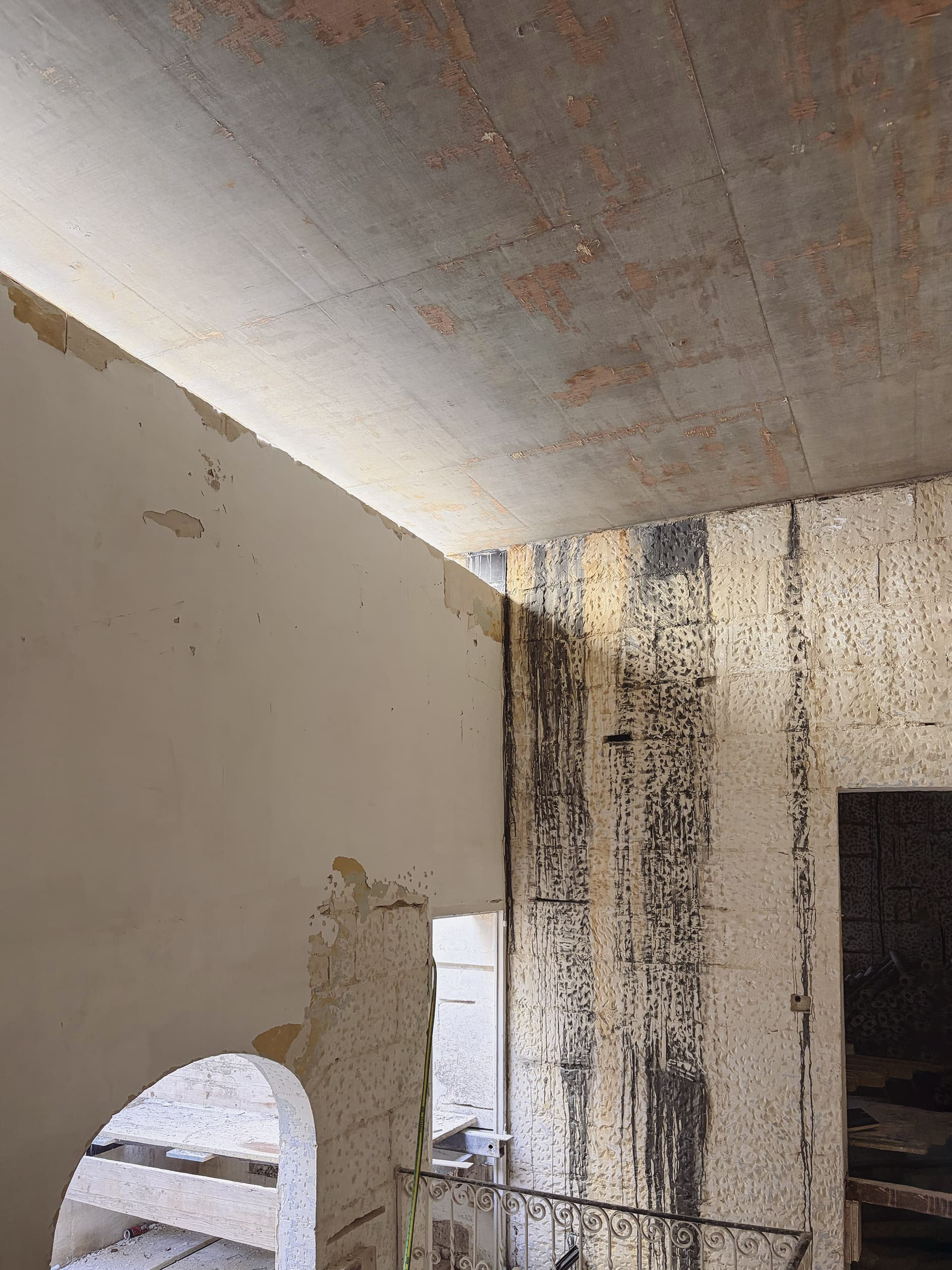
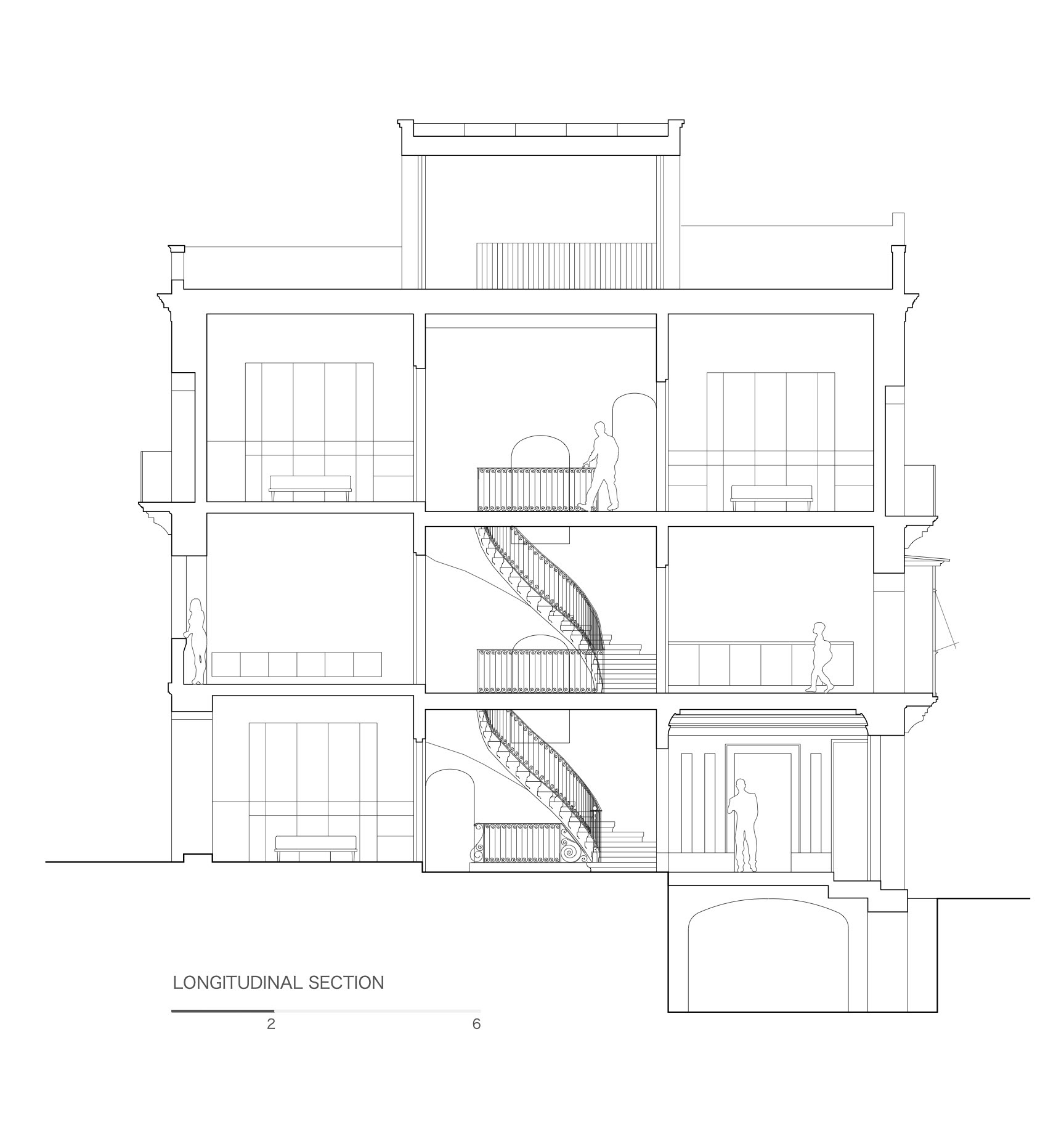
These openings reveal a newly created double-height space formed by removing part of the floor of the former priest's room. Originally, the lower level of the house served as a space for keeping livestock, where limited daylight and poor ventilation were of little concern. Over time, however, the steel beams supporting the traditional stone flooring began to corrode, causing significant damage to the structure above. Rather than simply replacing the existing floor, the intervention selectively removes portions of it, transforming a structural challenge into an opportunity to introduce light, ventilation and visual connections between levels. The result is a brighter and more usable lower floor while preserving the character of the original building.
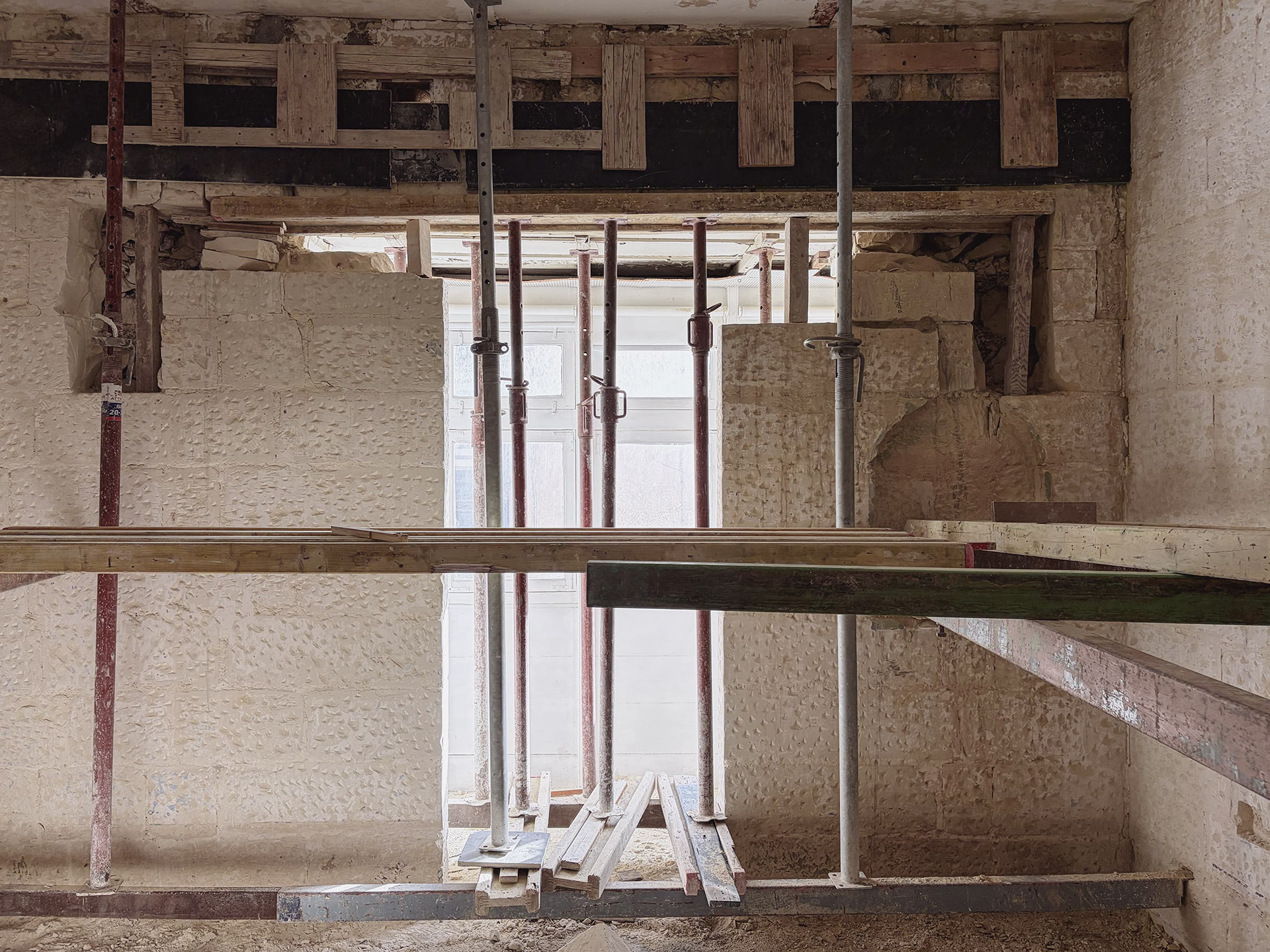
At the centre of the house, the traditional internal yard once again becomes a primary source of light and air. Years of exposed services, secondary additions and incompatible finishes are removed to reveal the original Franka limestone masonry beneath. This process of subtraction allows the building's historic fabric to become visible once more and re-establishes the courtyard as a vital spatial and environmental component of the house.
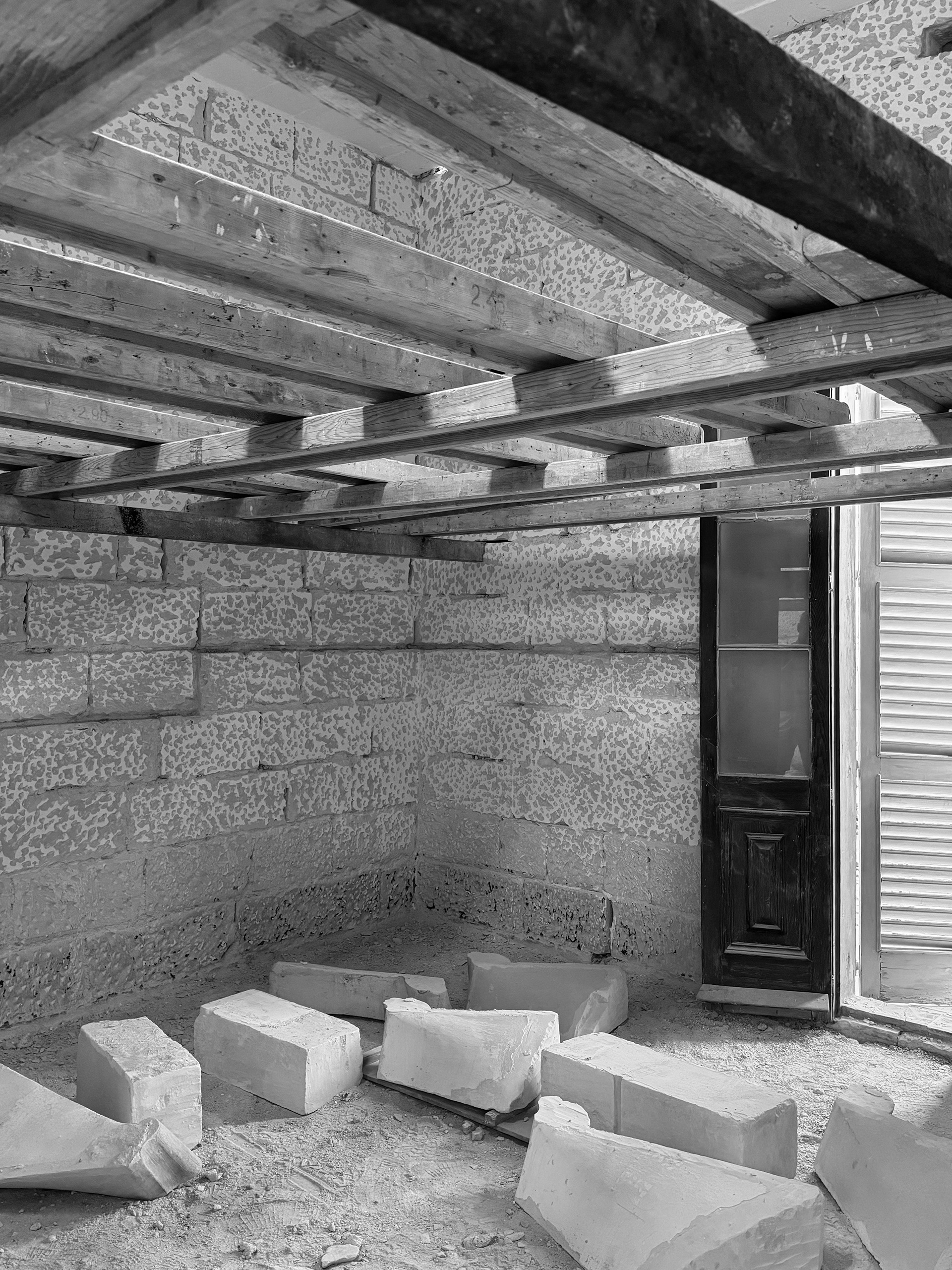
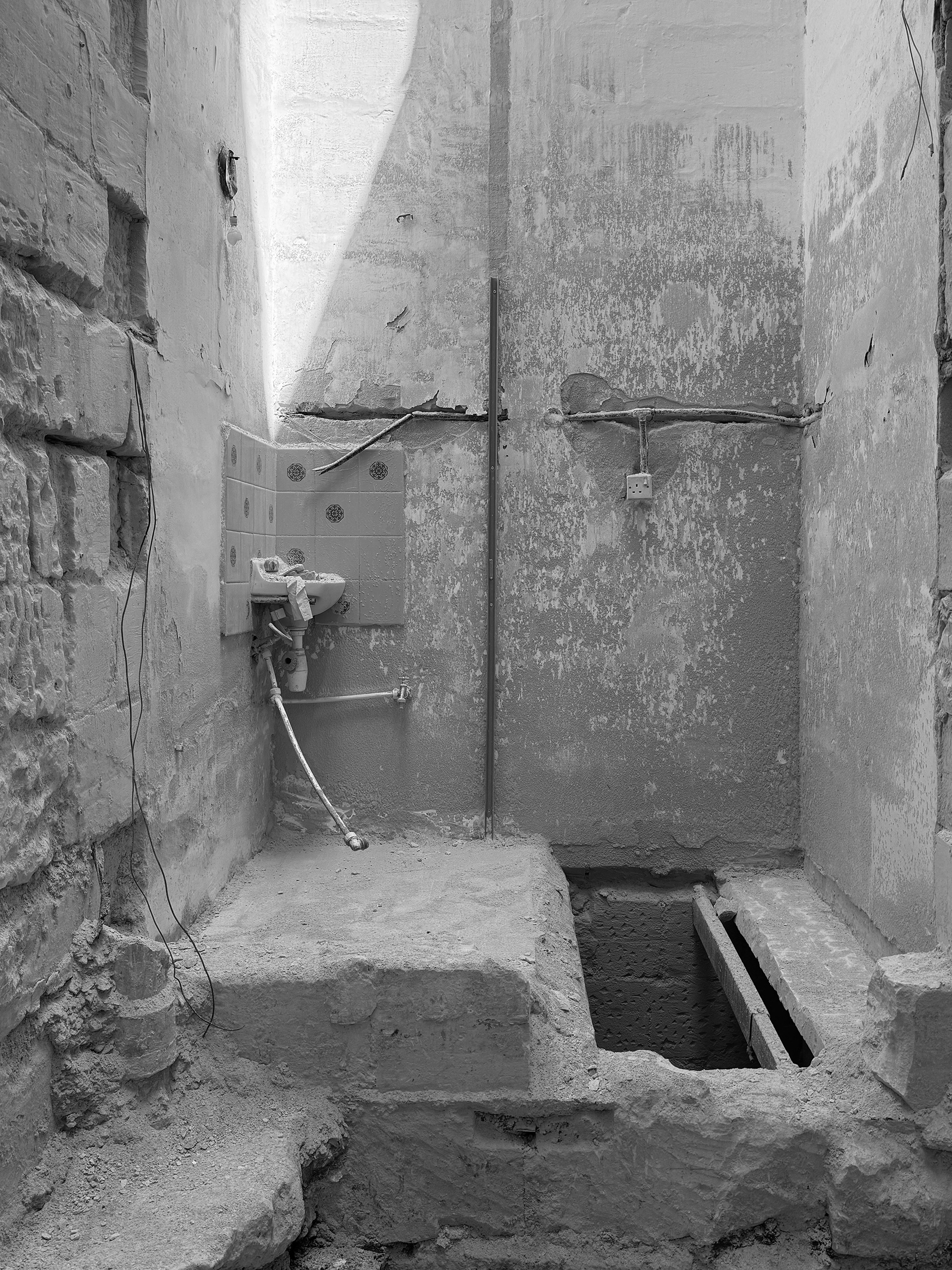
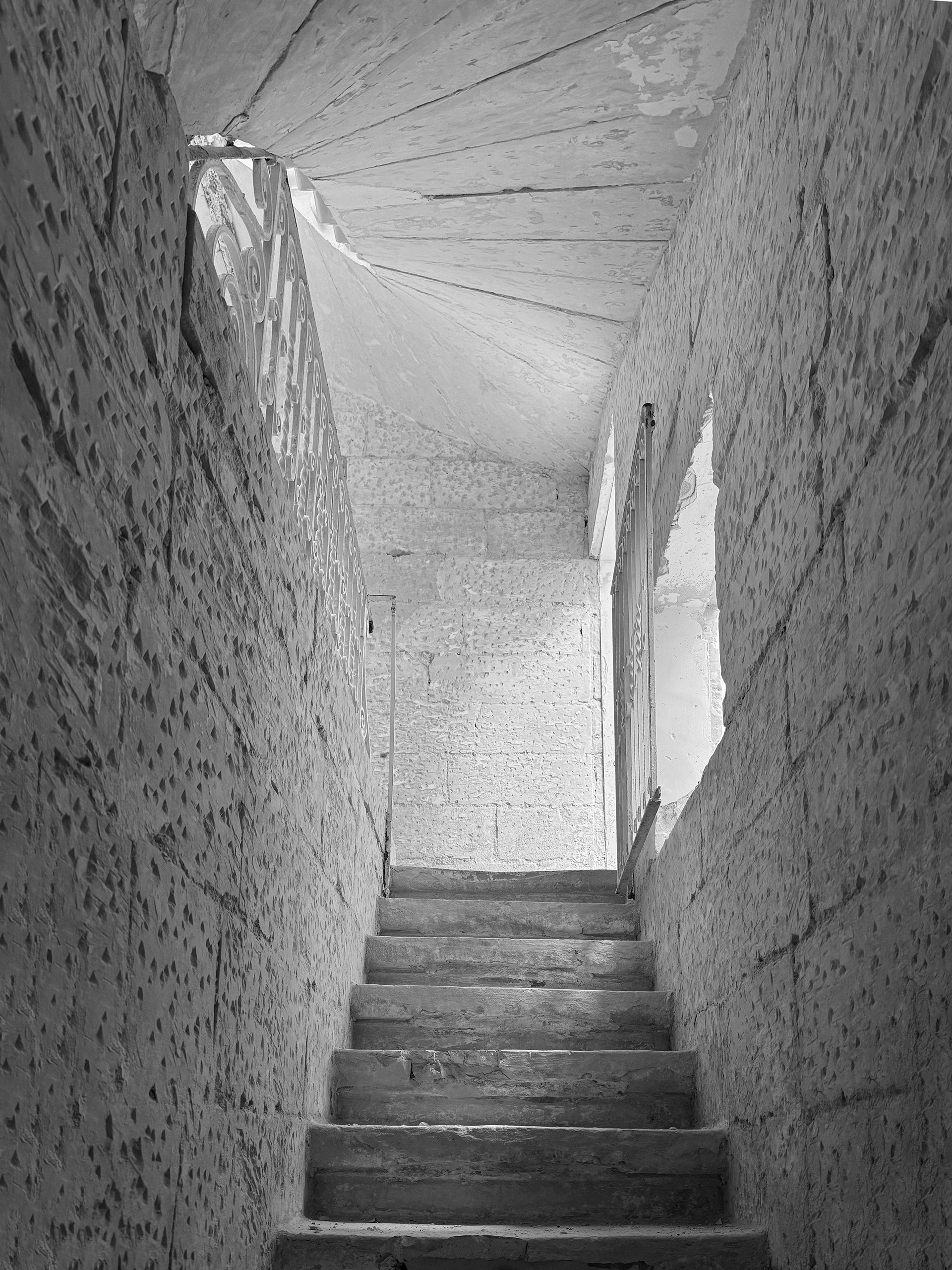
Throughout the project, traces of the building's history are deliberately preserved. Original patterned cement tiles are carefully restored, while selected surfaces remain exposed to reveal the textures and imperfections accumulated over decades of occupation. These layers provide a tangible connection to the building's past and contribute to a richer and more authentic living environment.
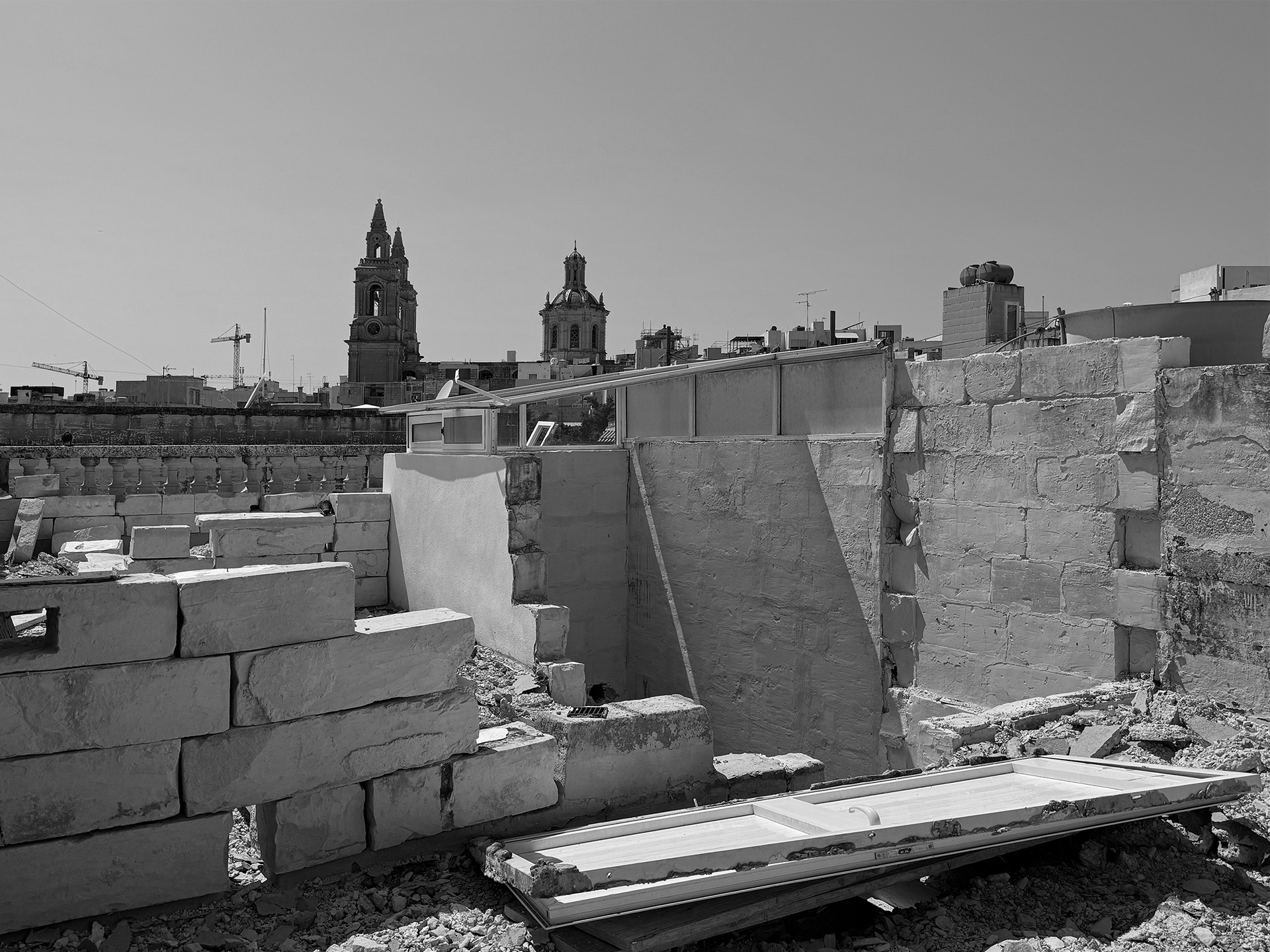
The most contemporary intervention is located at roof level, where a recessed addition is introduced behind the existing parapet line. Constructed using the same double-leaf limestone masonry principles found throughout the original house, the new volume contains a secondary kitchen and entertainment space. A continuous raised deck extends across the roof, connecting interior and exterior spaces through large sliding openings and creating a new outdoor living area in a property that historically lacked a rear garden.
From this elevated position, views extend across Marsamxett Harbour towards Valletta, establishing a new relationship between the house and its wider urban context. Together, the restoration and contemporary additions create a home that respects its heritage while responding to the expectations of modern life, demonstrating how historic Maltese townhouses can be sensitively adapted for future generations.
location sliema, malta
type restoration and renovation
program residential
area 180 sqm
status under construction (2026)