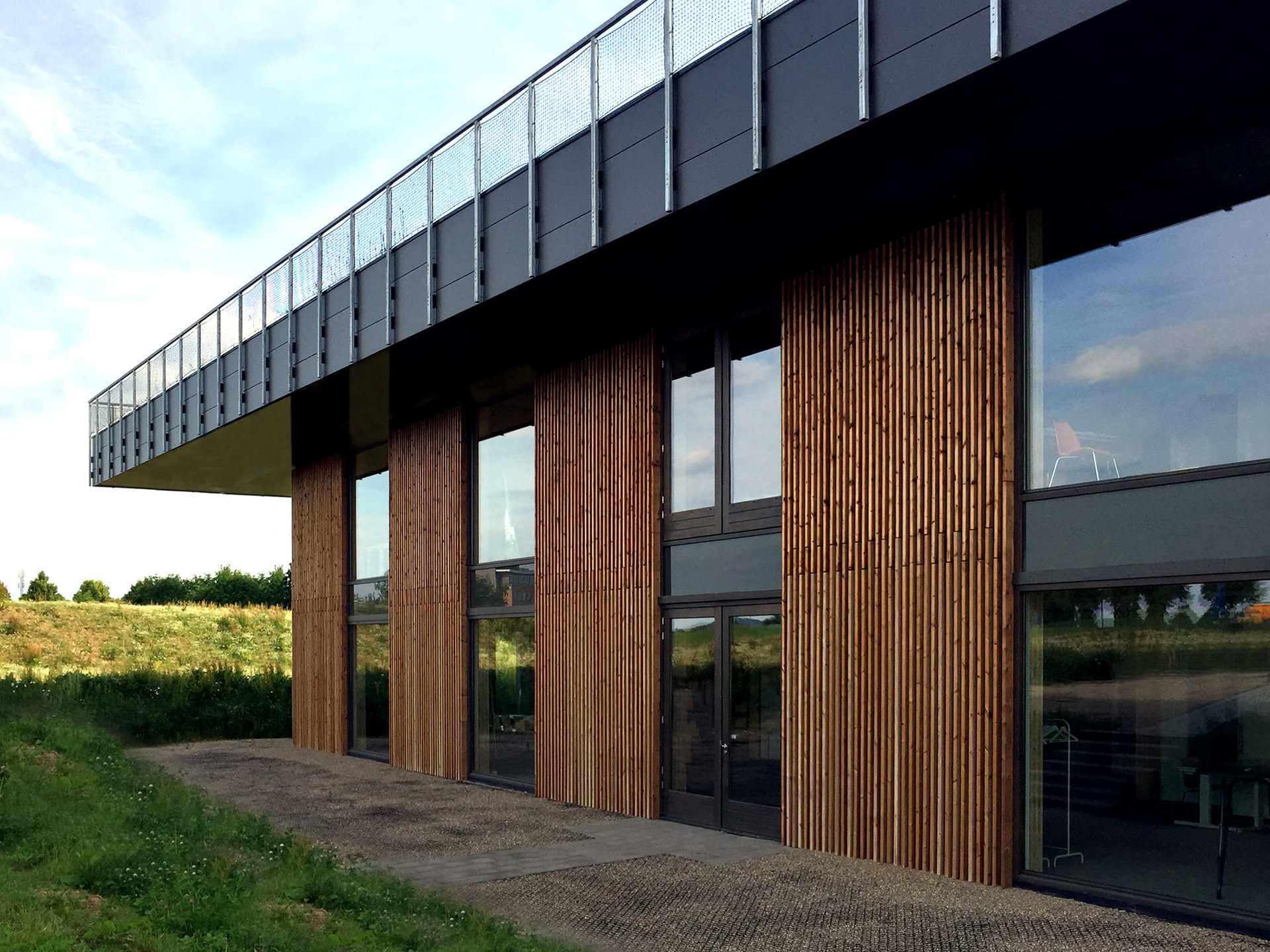
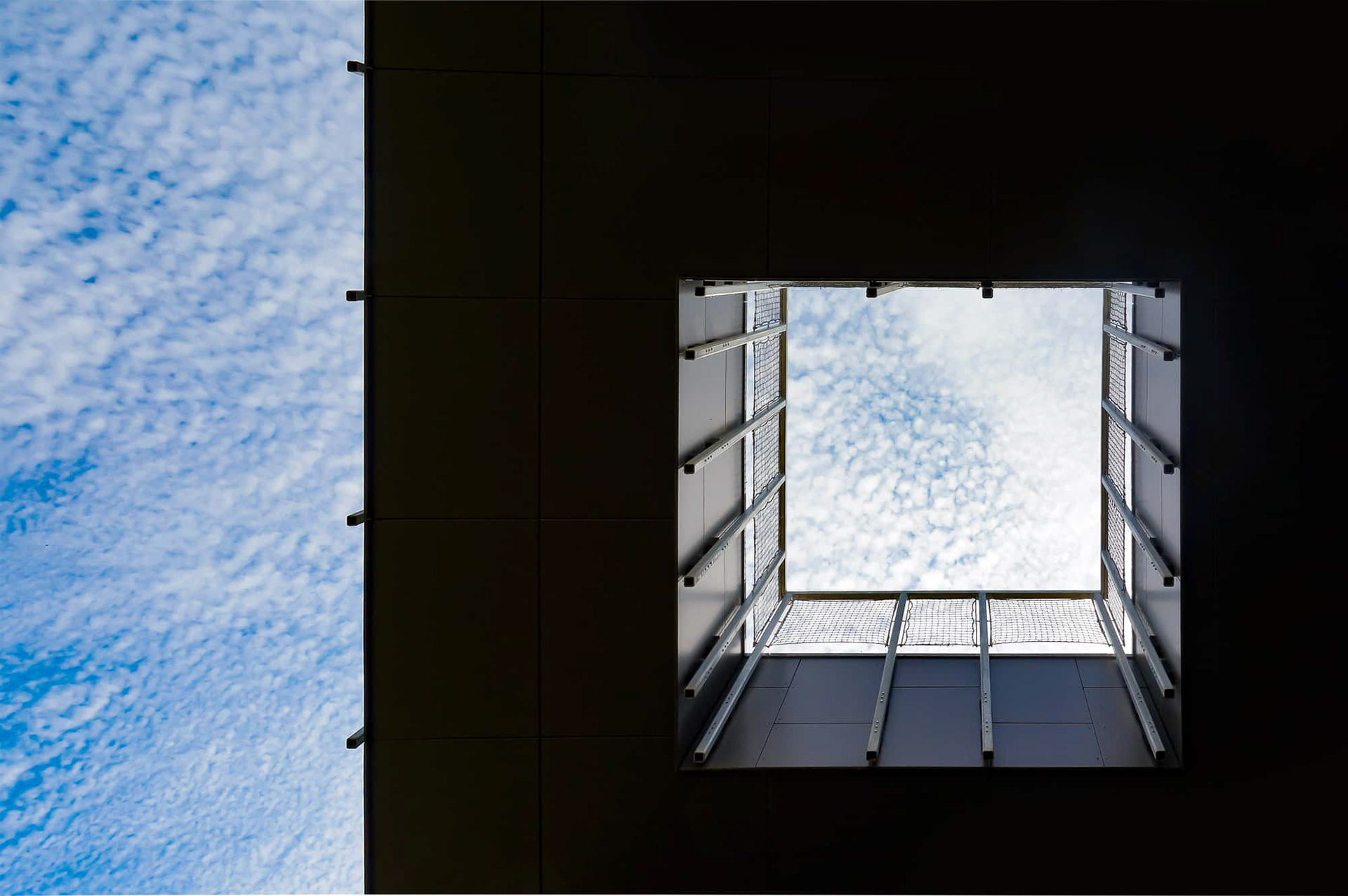
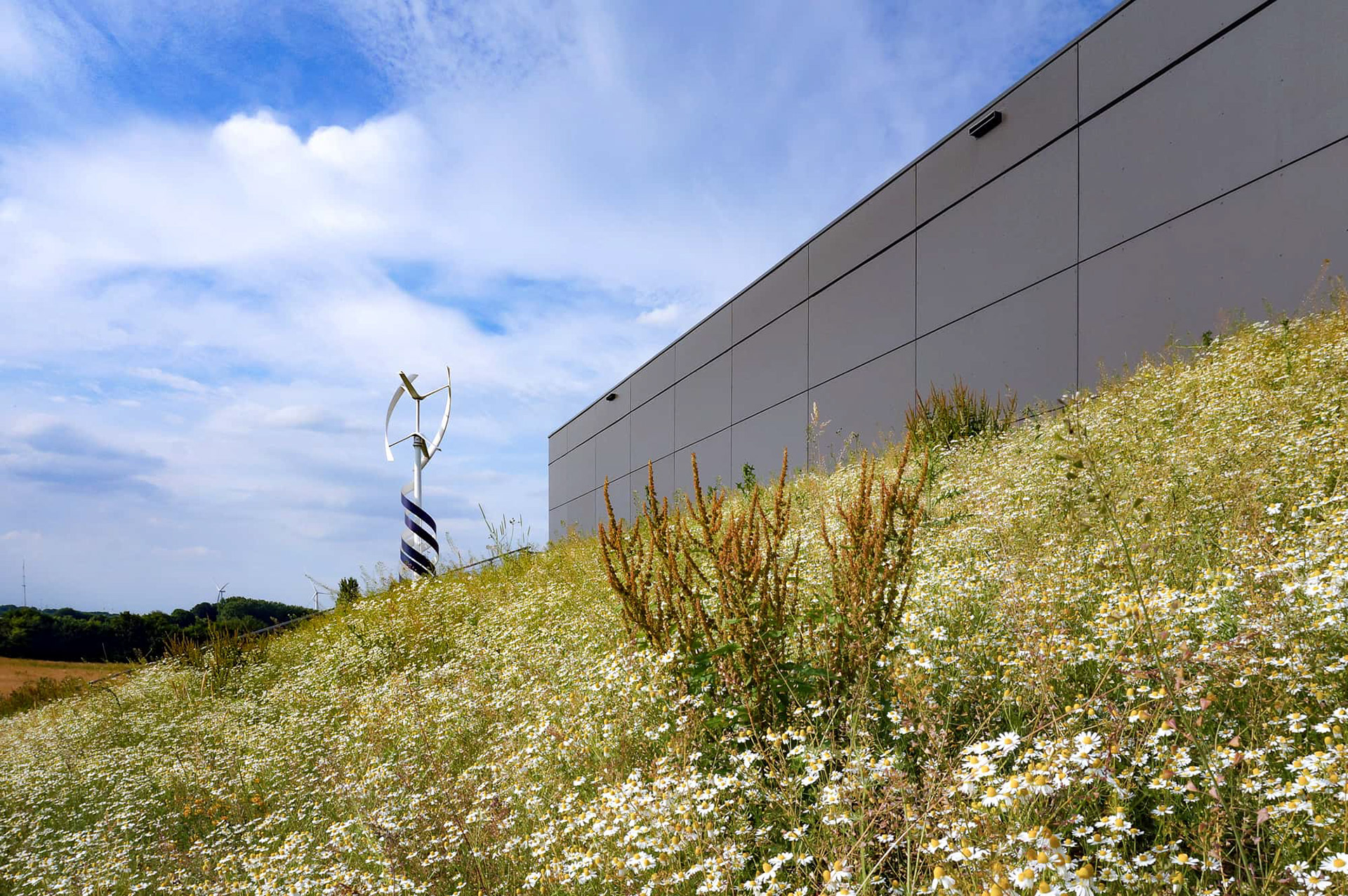
Econnect was developed as part of De Wijk van Morgen (The District of Tomorrow), an innovative research and development programme located at the European Science and Business Park Avantis on the border between the Netherlands and Germany. Bringing together students, researchers, businesses and public authorities, the initiative was established to explore new approaches towards a more sustainable built environment through the design, construction and monitoring of full-scale experimental buildings.
Selected by an international jury in 2009 and completed as the second realised project within the programme, Econnect was conceived as a prototype for future sustainable architecture. At a time when energy-positive buildings, circular material use and integrated food production were still emerging concepts, the project sought to demonstrate how architecture could actively contribute to environmental performance while remaining socially and spatially engaging.
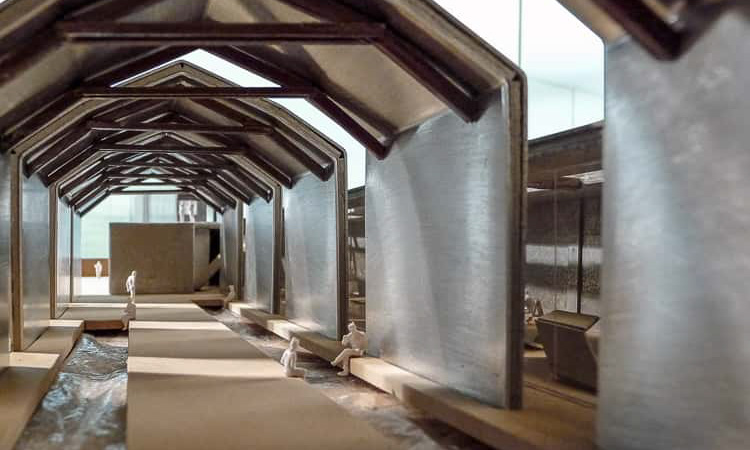
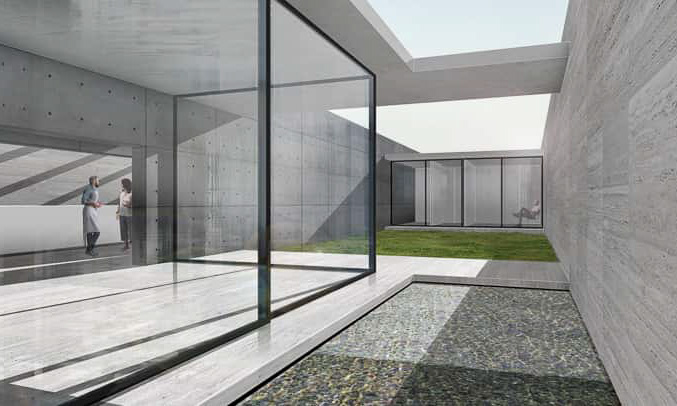
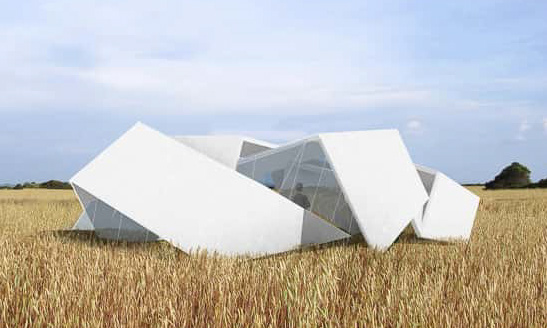
The building is organised around three interdependent elements: an earth slope, a central (intelligent monitoring) core and a greenhouse. Together, these components form both the conceptual foundation and environmental strategy of the project.
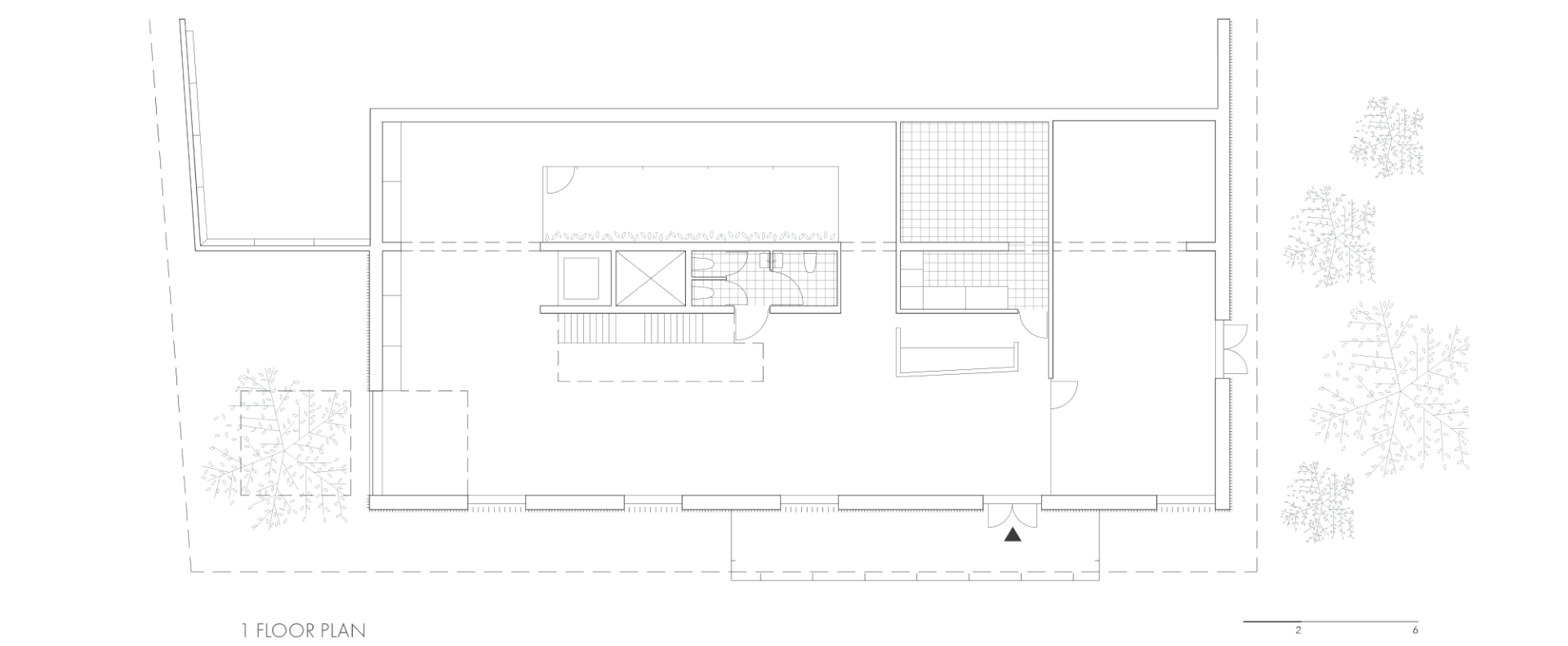
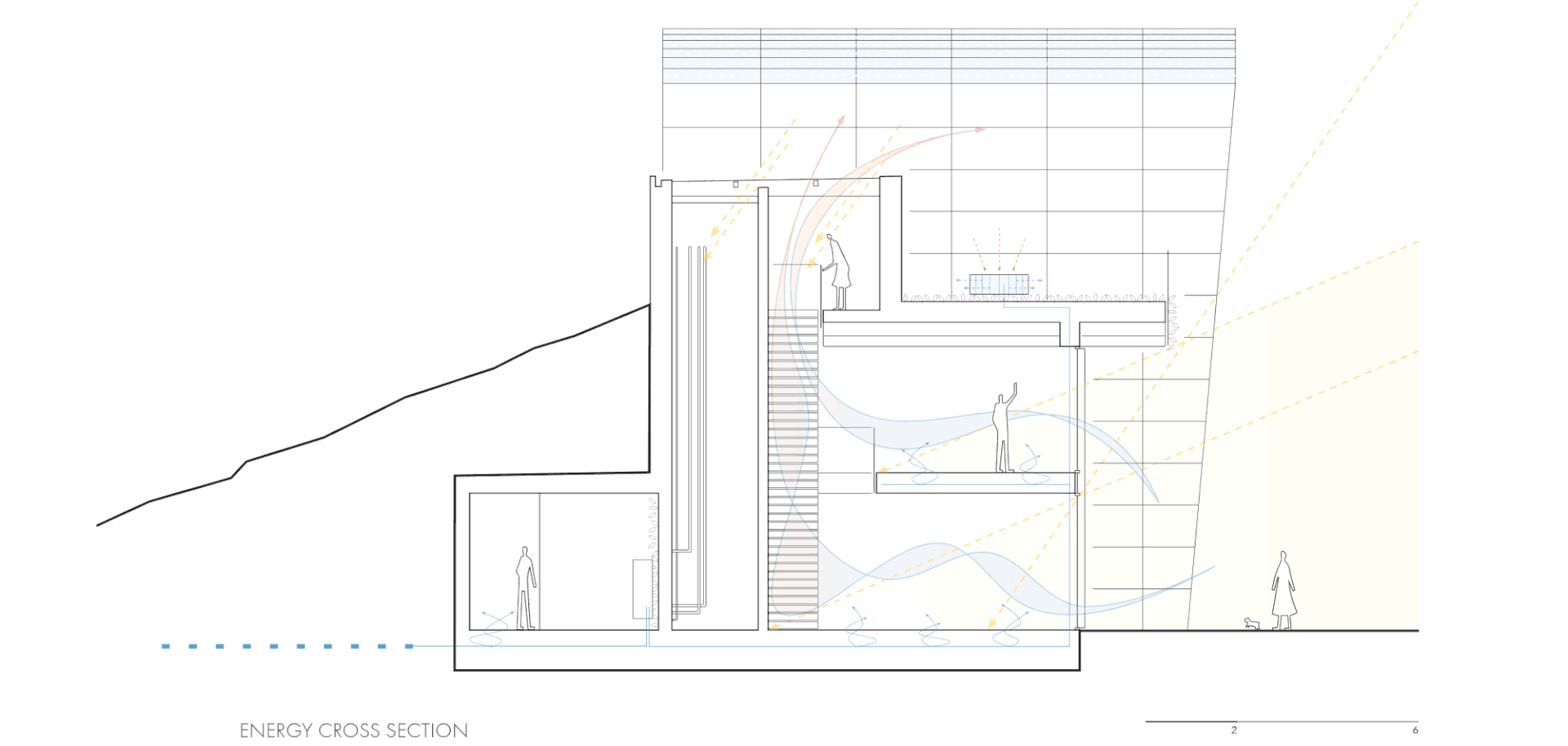
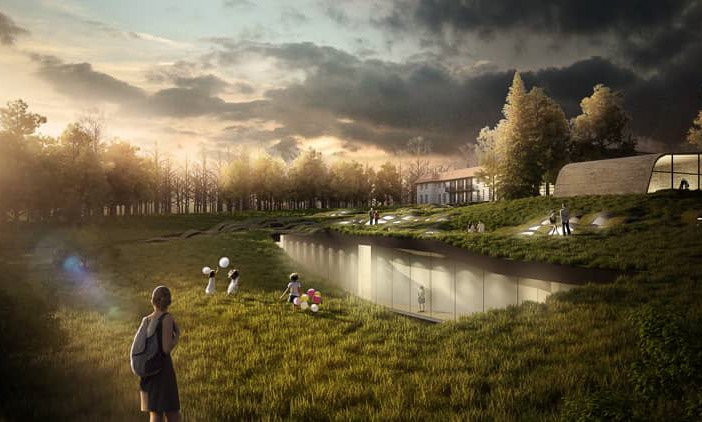
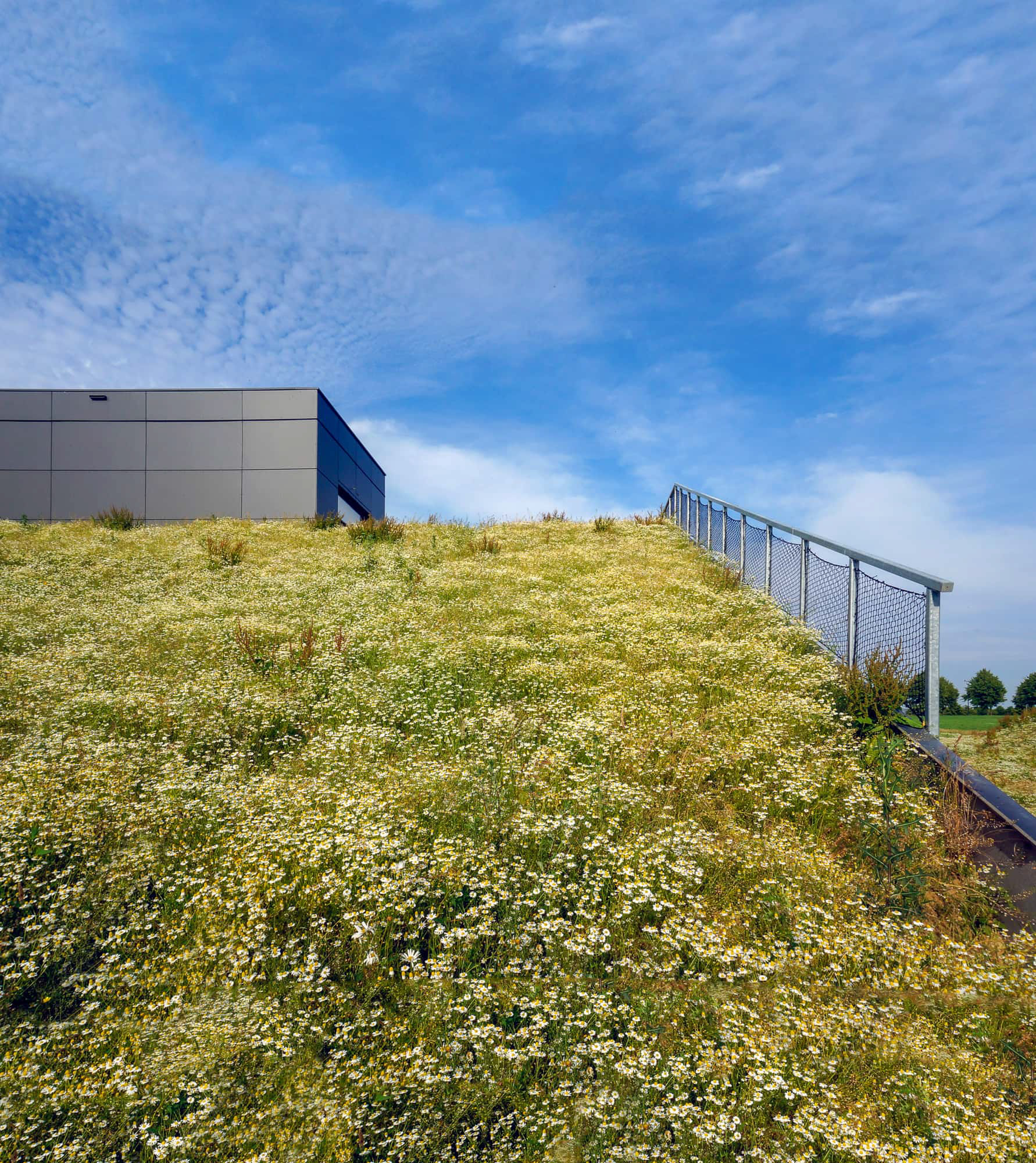
The earth slope serves multiple purposes. Beyond providing opportunities for recreation and cultivation, it acts as a natural thermal and acoustic buffer, using the insulating properties of soil to improve environmental performance. Embedded within this landscape is the building's core, accommodating the programme and monitoring facilities required to evaluate the building's long-term performance.
The greenhouse forms the most visible and dynamic component of the project. Acting as a climatic buffer at the entrance, it supports plant growth, extends the productive landscape and provides shelter for a restaurant where fruit and vegetables grown on site can be consumed. More than an environmental device, the greenhouse establishes a direct relationship between architecture and food production.
Material efficiency formed an important part of the design strategy. The building was conceived as an energy-positive structure with a total material mass of only 590 kg/m², of which more than half consisted of renewable or recycled materials. These ambitions were integrated from the earliest design stages, demonstrating how environmental performance could be embedded within the architecture itself rather than added as a technological afterthought.
The project ultimately became known as Econnect—a name that reflects its central idea: creating meaningful connections between architecture, landscape, energy, food production and human activity. More than a single building, it served as a prototype for future sustainable development and helped establish a foundation for the subsequent projects realised within the District of Tomorrow programme.
location aachen, germany
design team leroy merks, roel derkx
local architect satijnplus architecten
type winning architecture and sustainability competition
program office and exhibition space
size 2.130sqm
commission open competition (2009)
status partially completed (2014)
awards nominated for the energize the future award