In a city such as Beijing, where office space is both valuable and increasingly expensive, the renovation of this workplace was driven by a seemingly contradictory brief: accommodate a larger workforce while significantly increasing the number of meeting and collaboration spaces available to employees.
Conventional office planning often addresses these requirements independently. More workstations typically result in fewer shared spaces, while increasing the number of meeting rooms often reduces overall capacity. The challenge of this project was therefore to create a workplace that could support both objectives simultaneously without compromising the quality of the working environment.
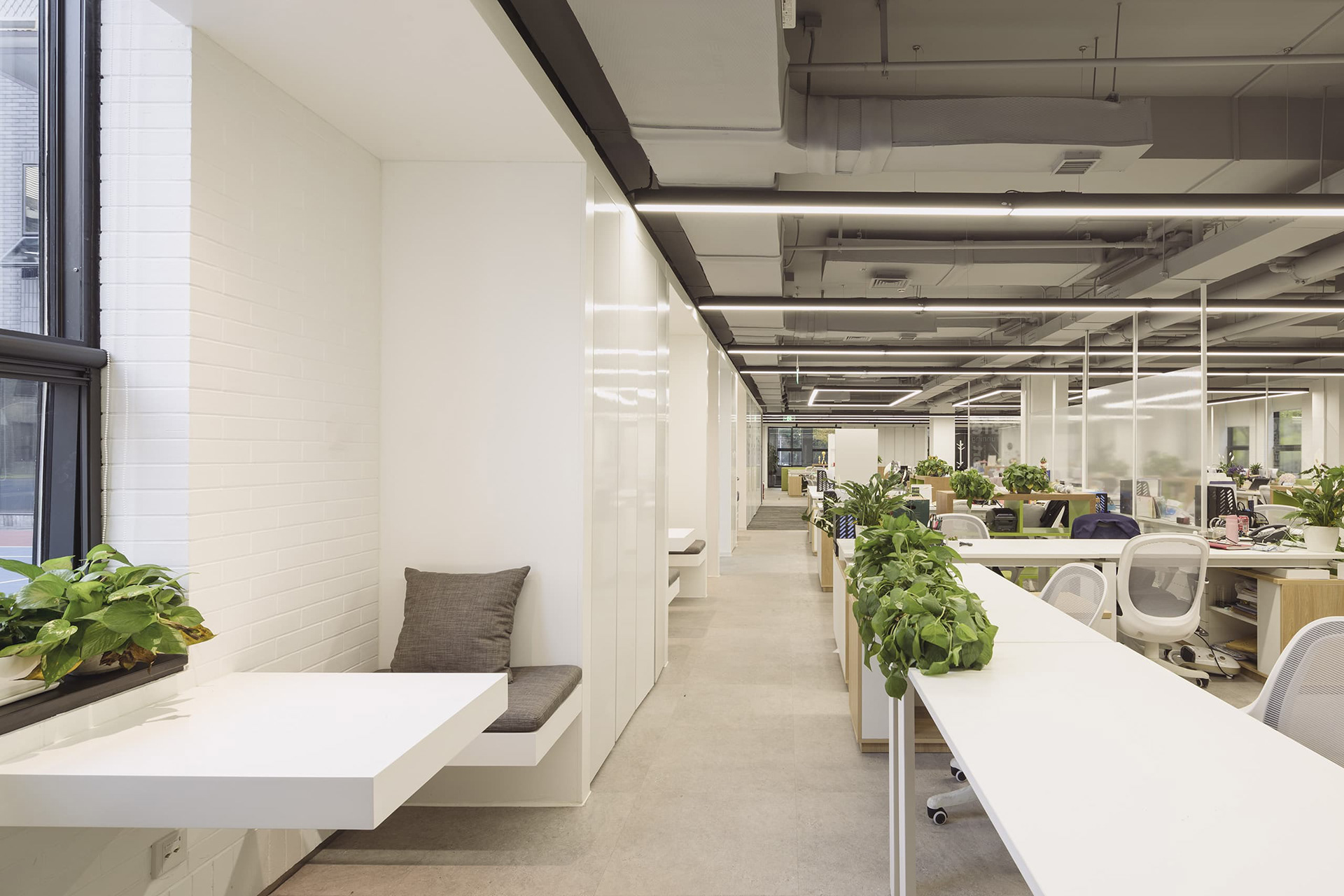
The design strategy began by reconsidering how space is allocated within a traditional office. Rather than separating workstations, meeting rooms and circulation into clearly defined zones, the proposal integrates these functions into a continuous and interconnected environment. Eliminating conventional corridors led to a more fluid and dynamic office environment where interaction becomes a natural part of daily movement.
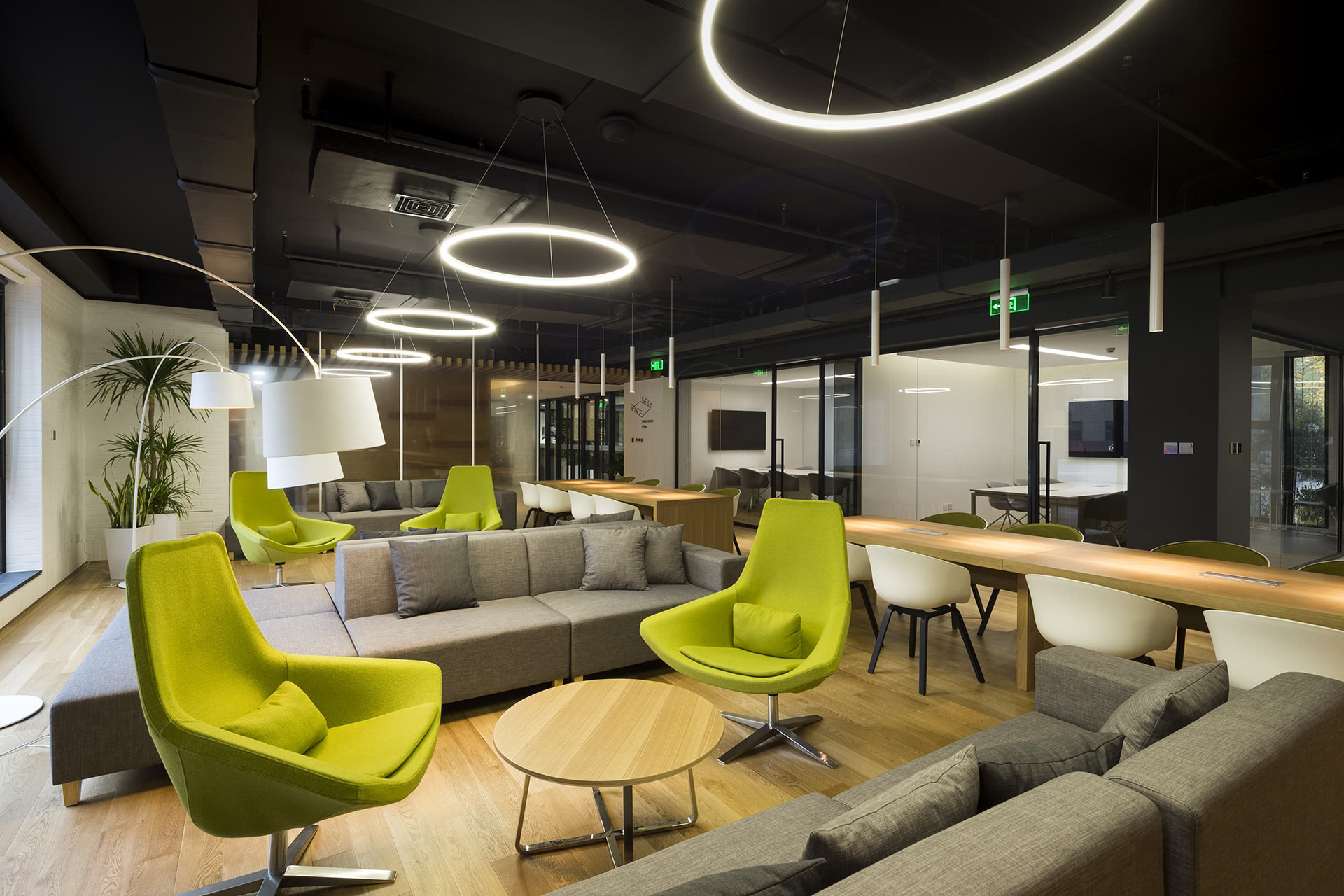
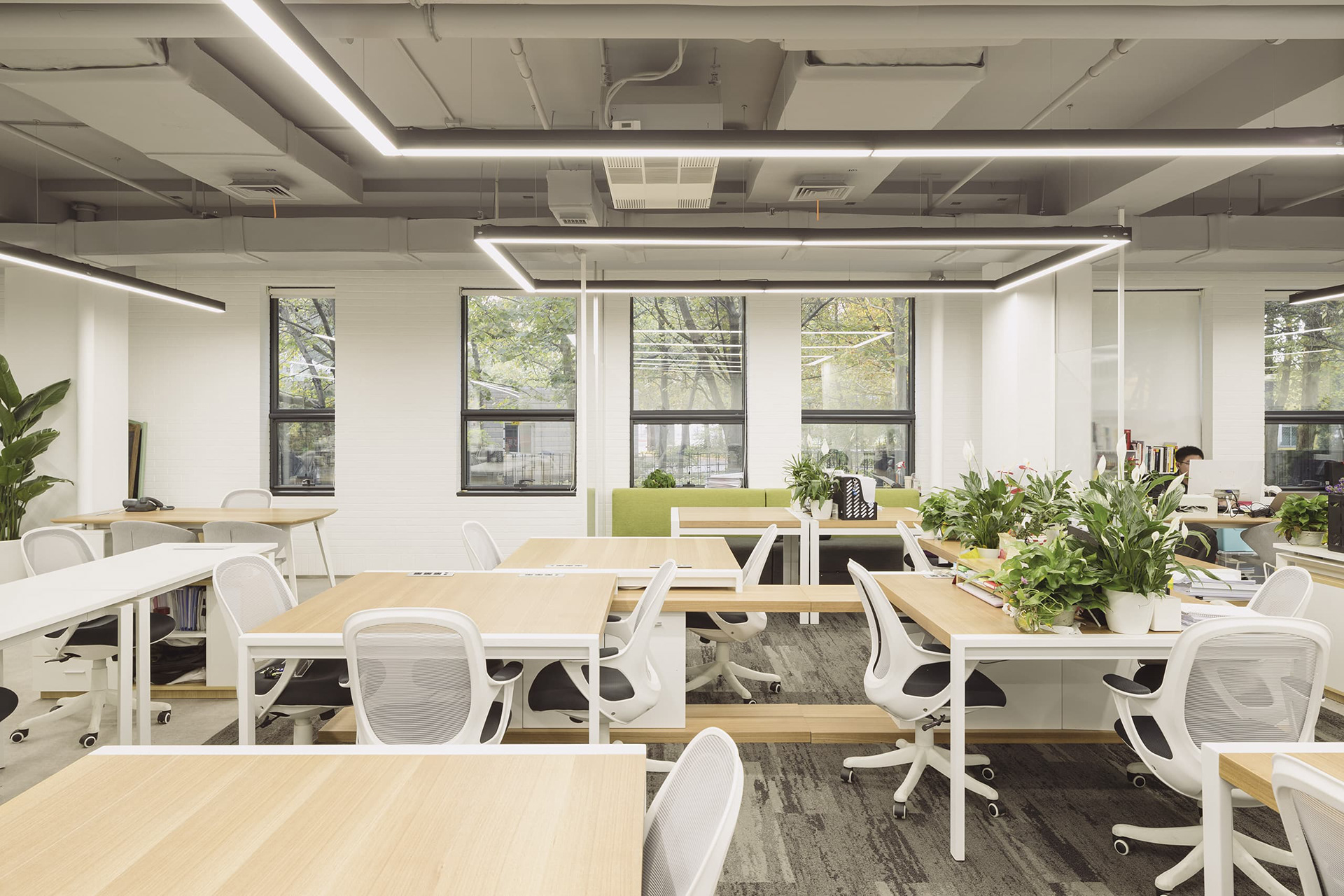
The workstation itself was reimagined as a place for both individual focus and spontaneous collaboration. Each cluster of desks incorporates a raised central element that functions as a privacy screen while also providing a standing-height surface for informal meetings. Complemented by integrated seating areas, these interventions allow colleagues to exchange ideas and solve problems without occupying enclosed meeting rooms unnecessarily.
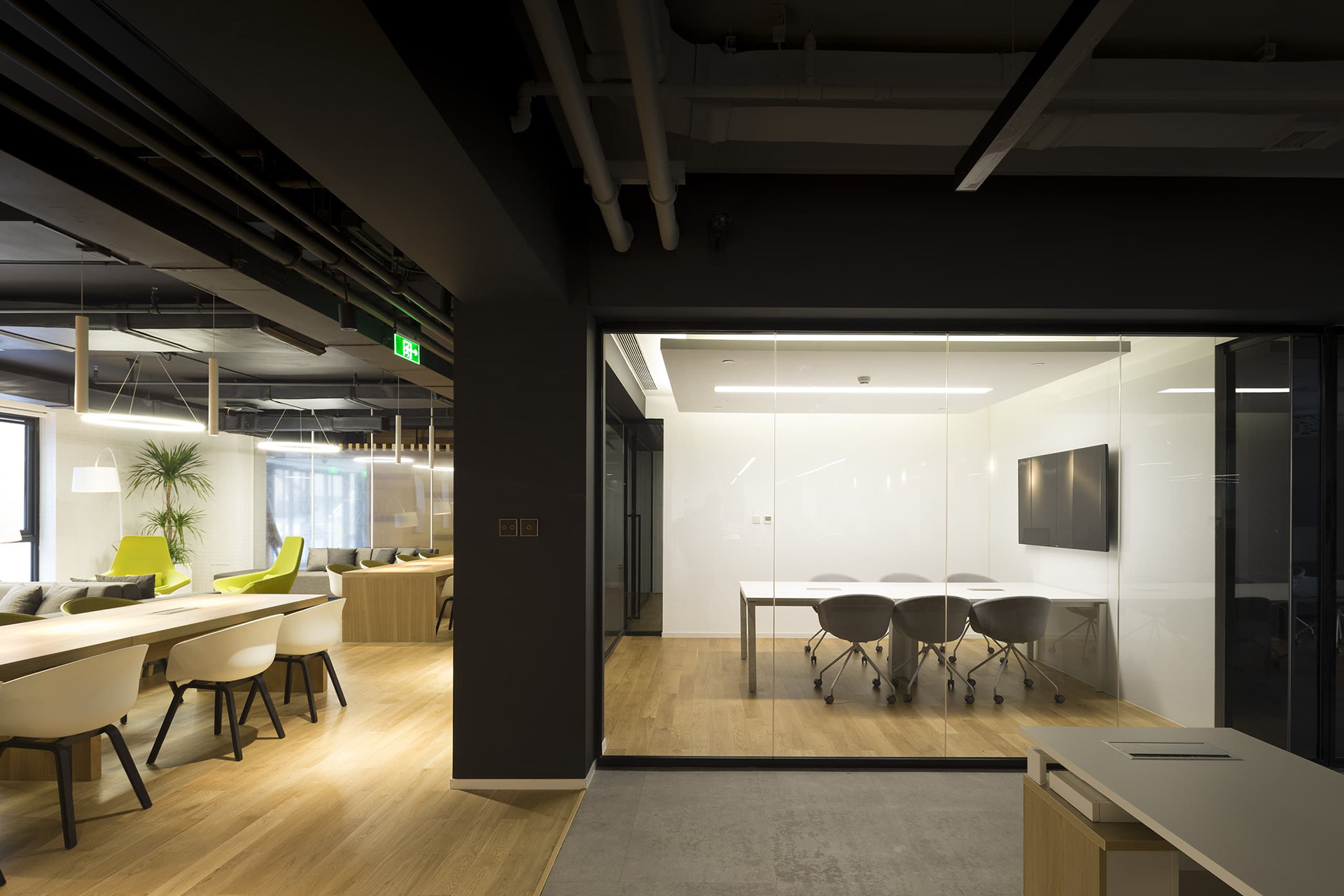
Areas dedicated to focused work are contrasted with darker, more intimate spaces designed for formal collaboration, discussion and knowledge sharing.
By embedding opportunities for collaboration directly within the workspace, the project encourages communication while preserving valuable floor area. The result is a highly efficient office environment that balances density with flexibility, creating a workplace where productivity, interaction and employee wellbeing can coexist within a compact footprint.
location: beijing, china
type: interior renovation
program: office and meeting space
area: 700sqm
design team: toshio tsushima, leroy merks, cansu bulduk
status: completed (2017)
services: interior design, site coordination