Located within Beijing’s airport tax-free zone, the project was conceived as a marketing centre that demonstrates an alternative vision for the contemporary workplace. More than a sales environment, the building serves as a physical expression of a new office philosophy, one that prioritises openness, wellbeing and flexibility over the repetitive and enclosed workspaces that have traditionally defined office culture.
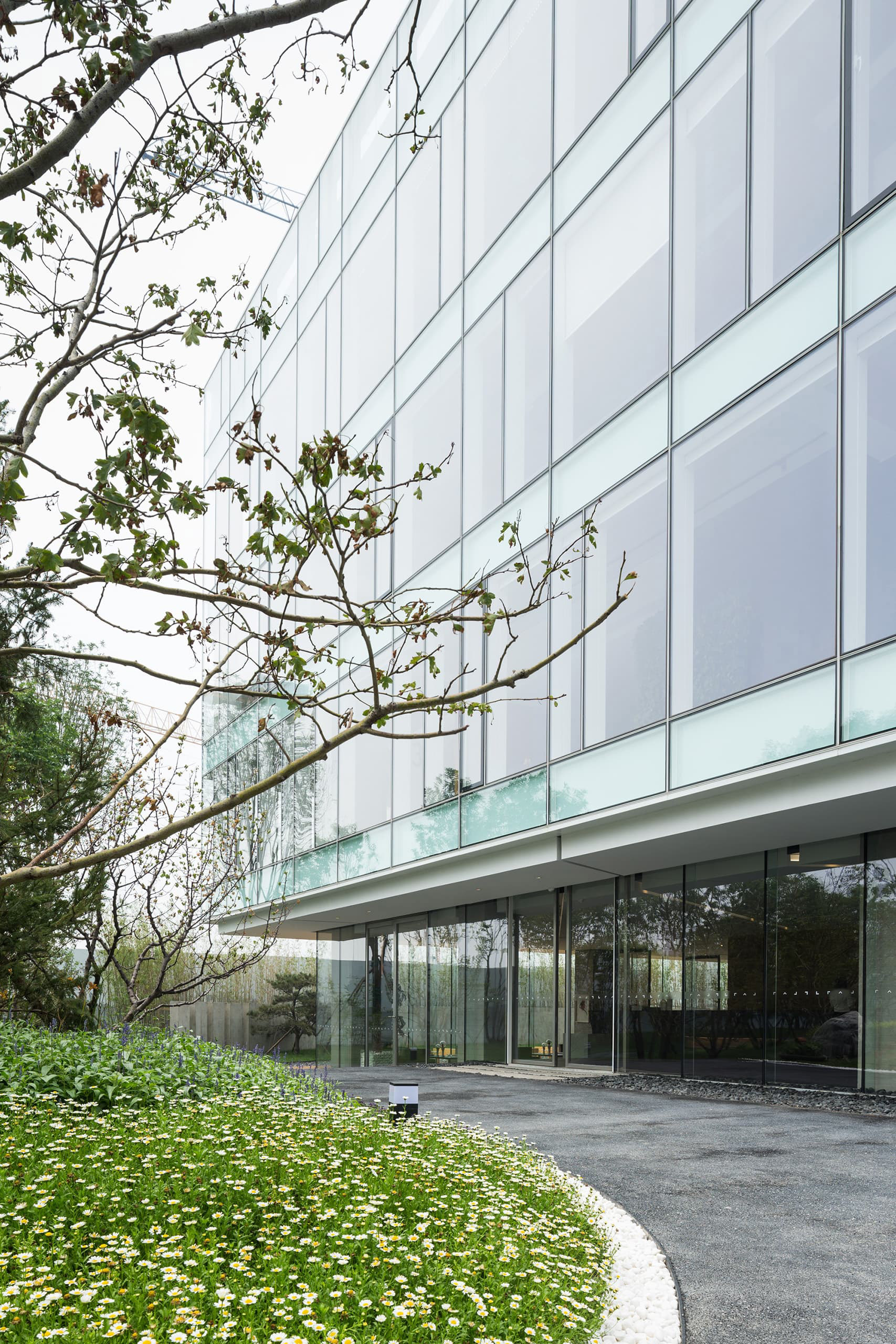
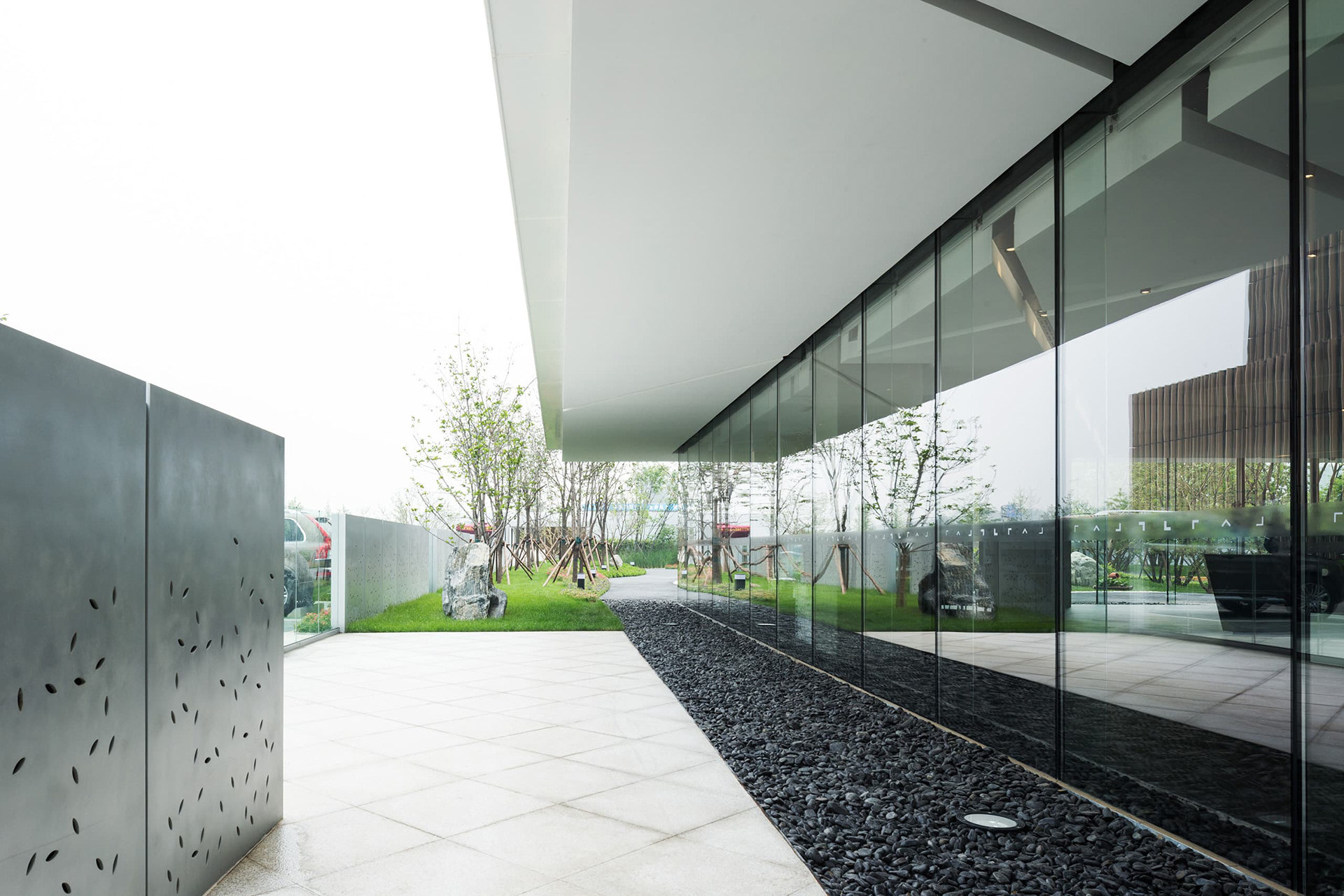
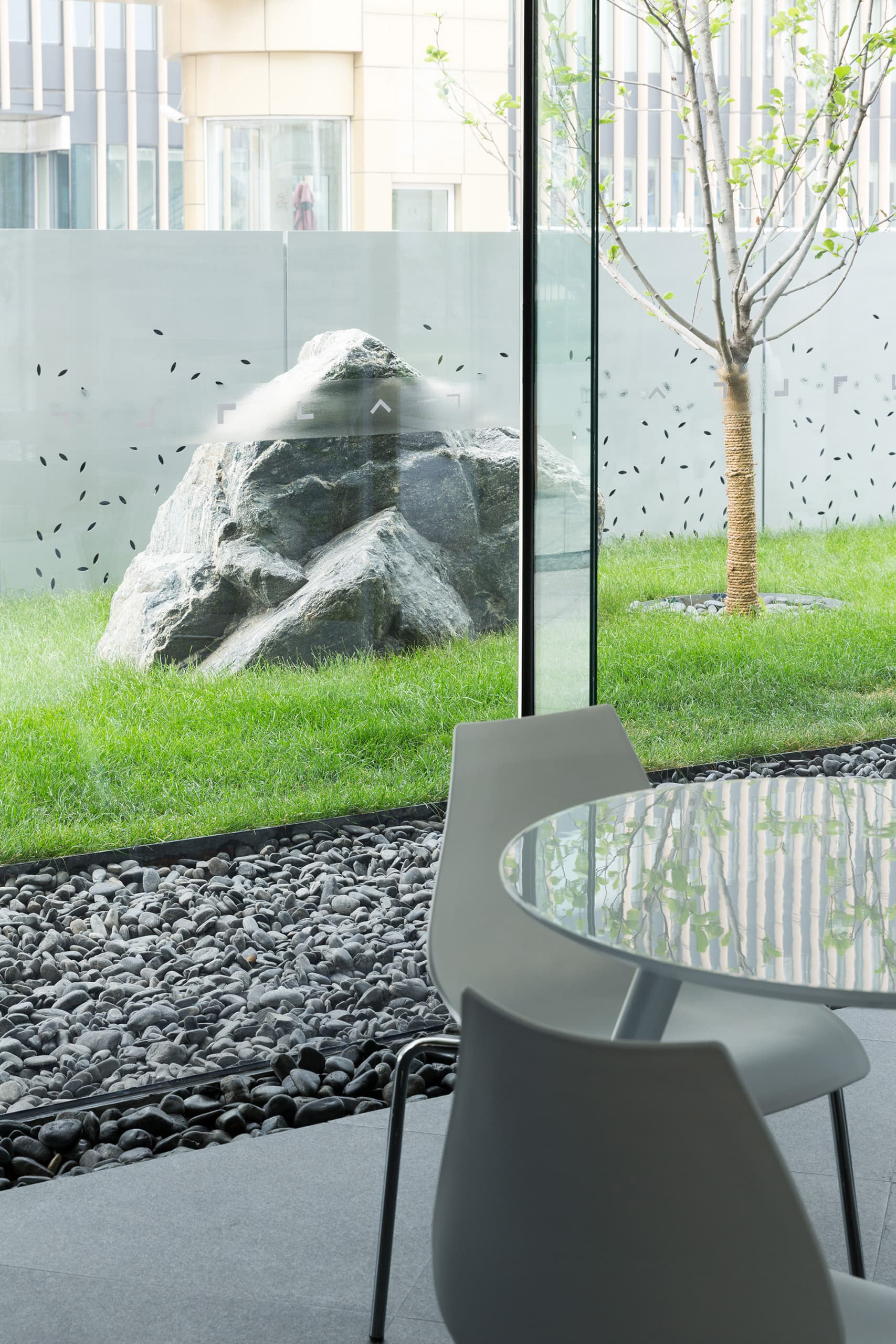
The architecture is organised as a transparent glass volume that appears to float above the landscape. Elevated upper floors create a sheltered ground level that dissolves the boundary between building and site, allowing the surrounding landscape to become an integral part of the visitor experience.
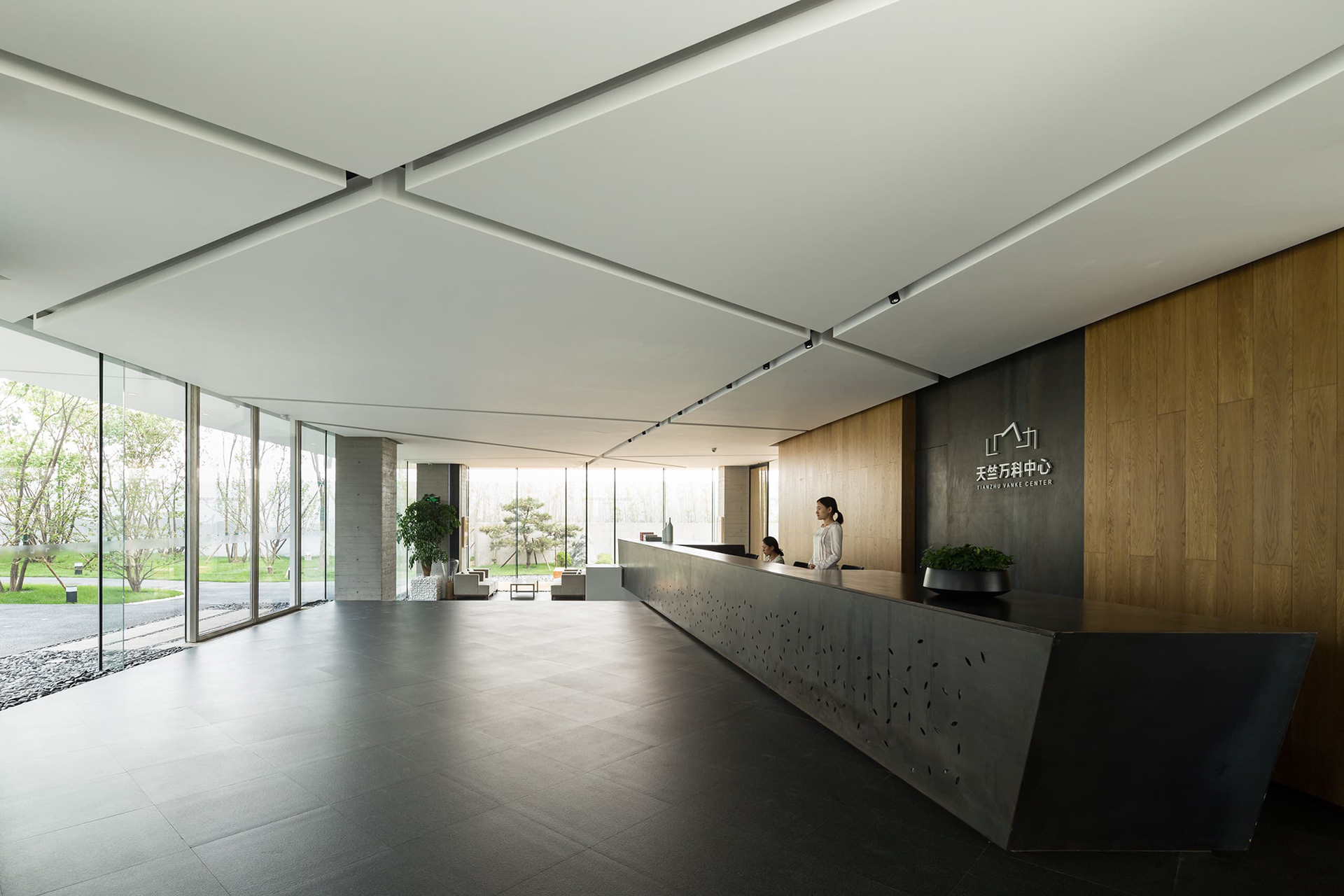
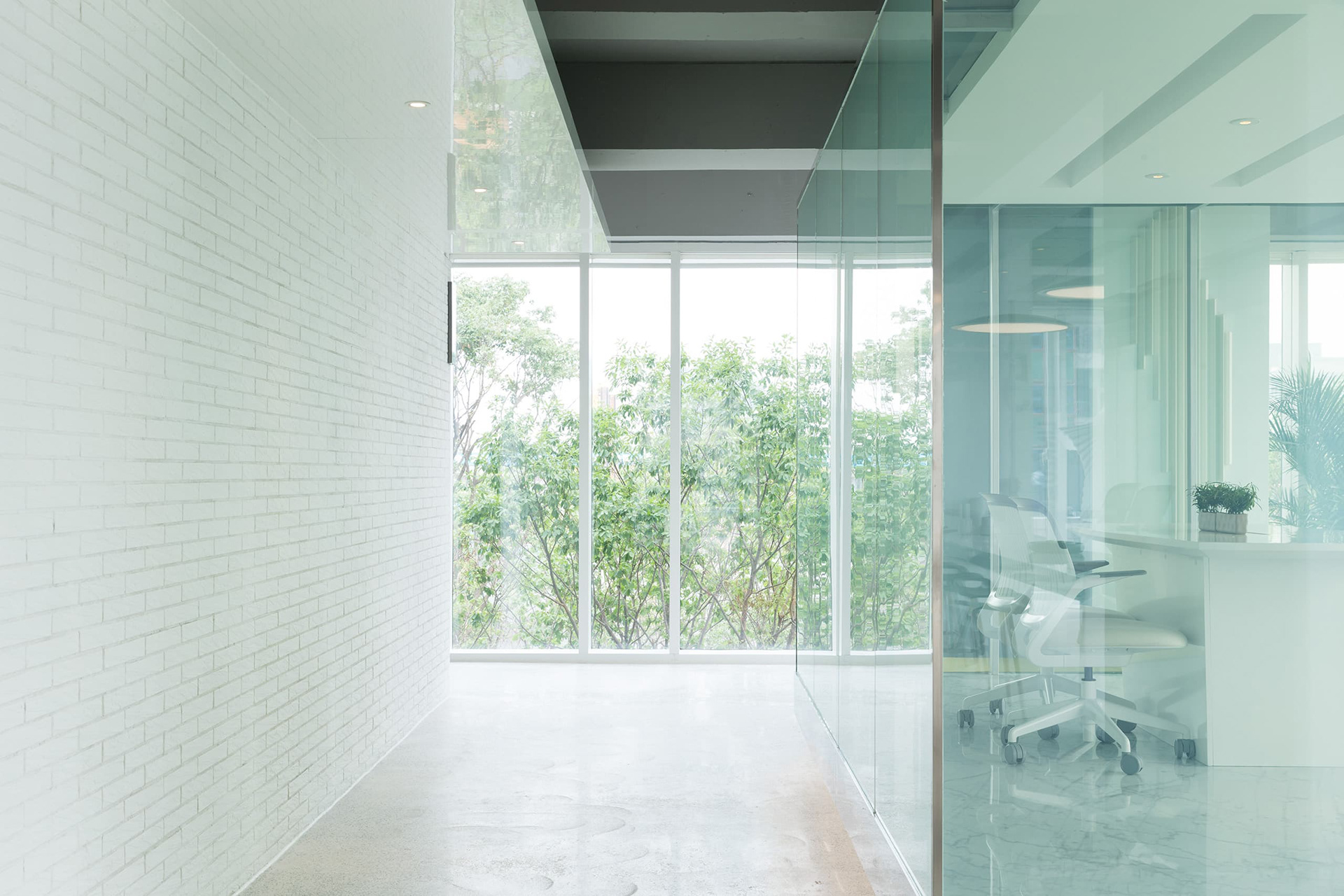
A meticulously detailed glass façade forms the primary enclosure of the building. Transparency becomes both an architectural and conceptual device, promoting openness, natural light and visual connectivity throughout the workplace. Rather than isolating occupants from their surroundings, the building encourages continuous engagement with the landscape and changing environmental conditions throughout the day.
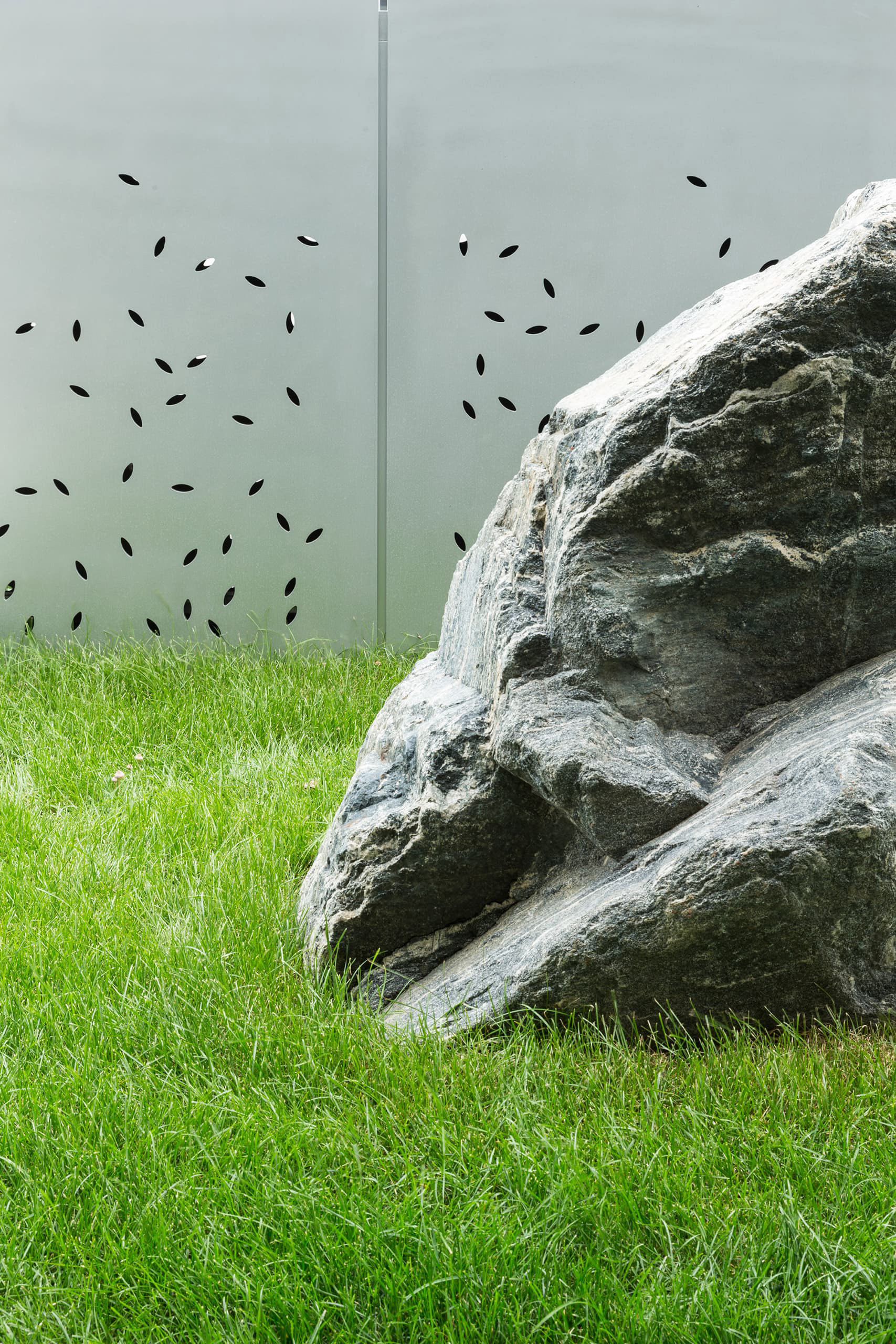
The landscape itself plays a fundamental role in shaping the identity of the project. Situated within a context dominated by infrastructure, roads and large-scale commercial development, the introduction of greenery creates a calm and restorative environment that softens the character of the surrounding district.
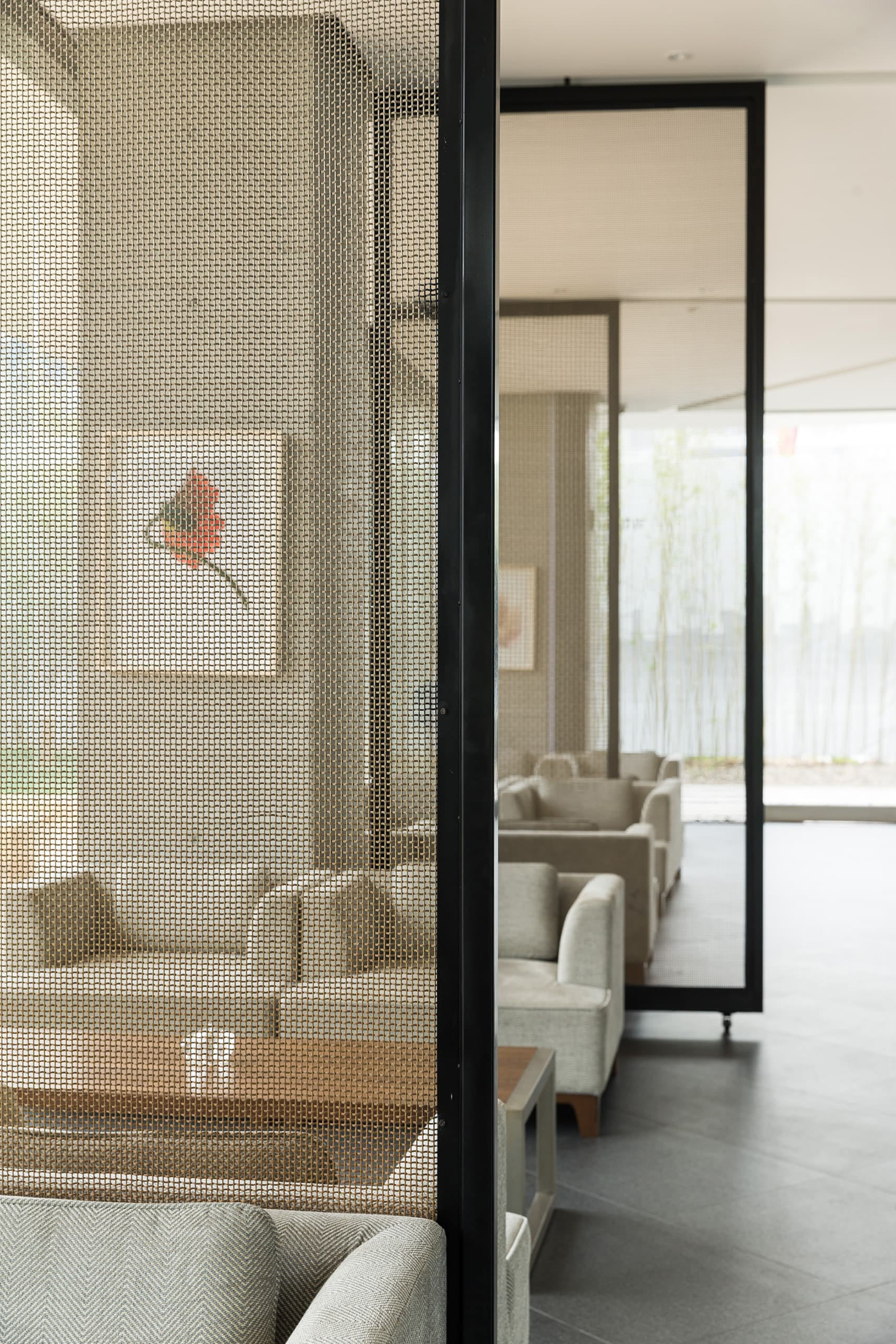
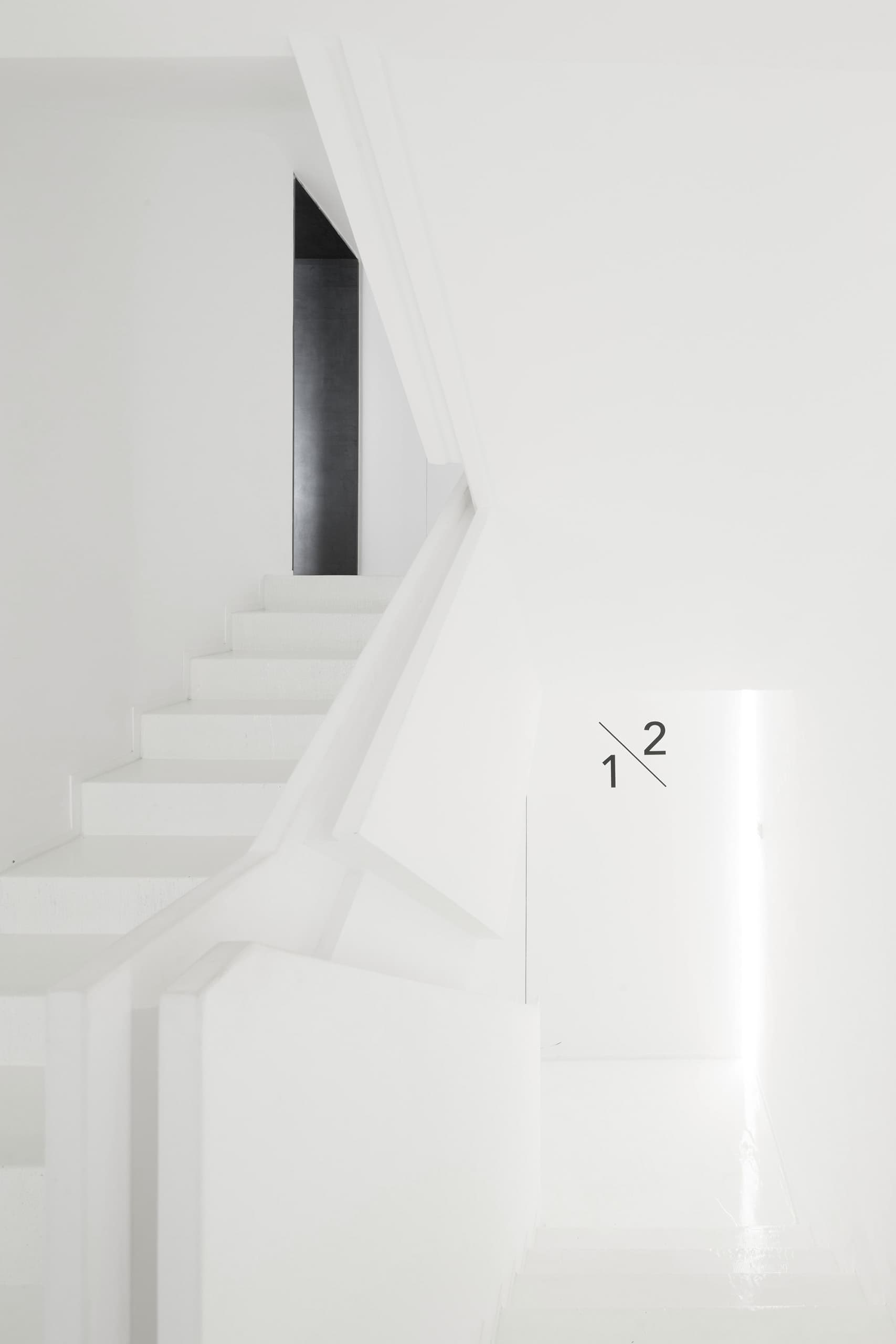
Internally, the project explores a broader definition of the workplace by incorporating a diverse range of environments inspired by domestic living. Spaces for gathering, dining, relaxation, informal meetings and focused work are integrated alongside more traditional office functions. Rather than assigning a single workspace to each employee, the building provides a variety of settings that support different activities, moods and working styles throughout the day.
location: tianzhou, china
type: architecture and interior design
program: marketing center and office
area: 2.300sqm
design team: toshio tsushima, leroy merks, winnie tam
local architect: beijing institute of architectural design
status: completed (2015)
awards: a&d awards excellence in architecture
services: architecture, interior design, site coordination