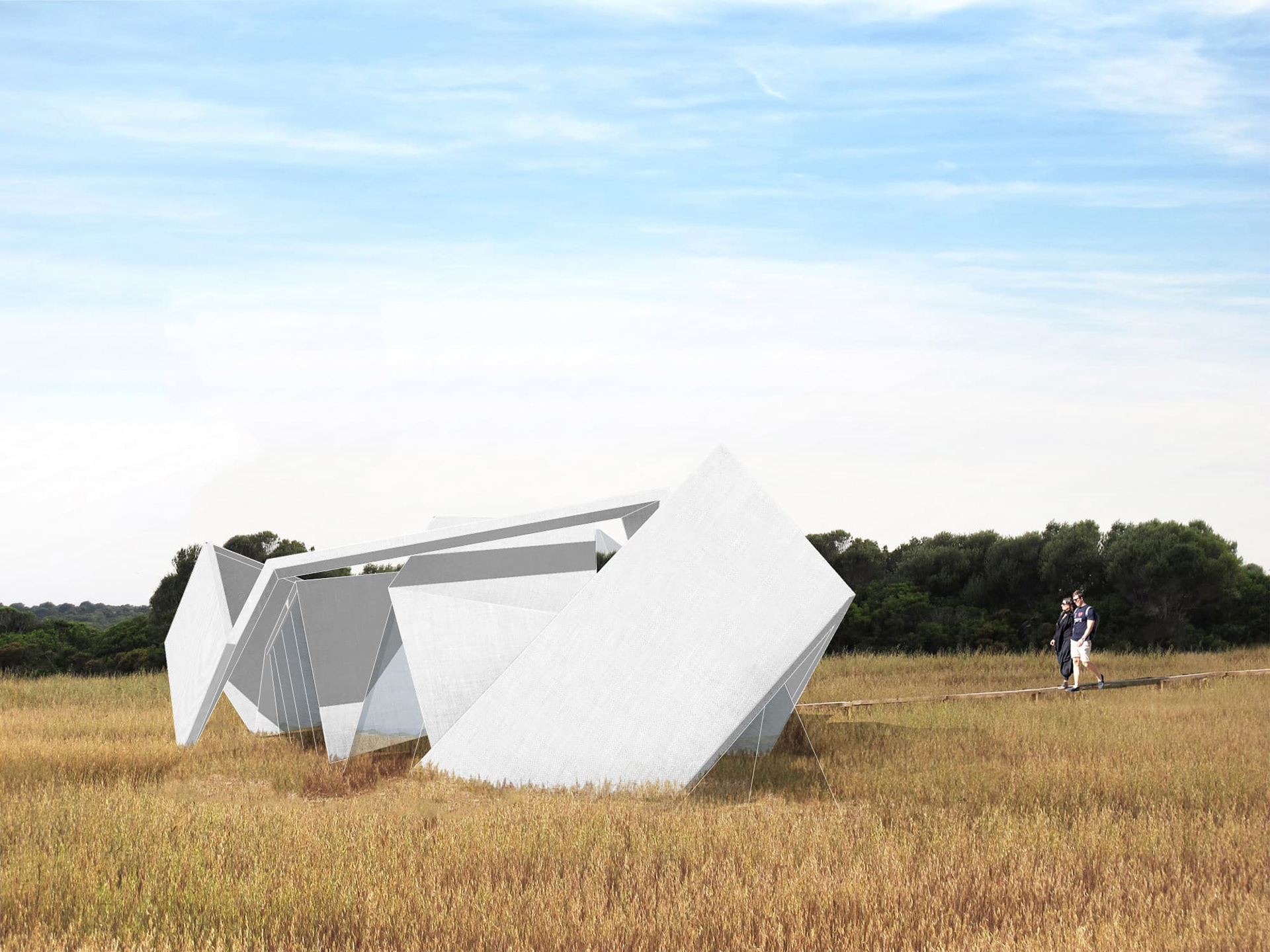
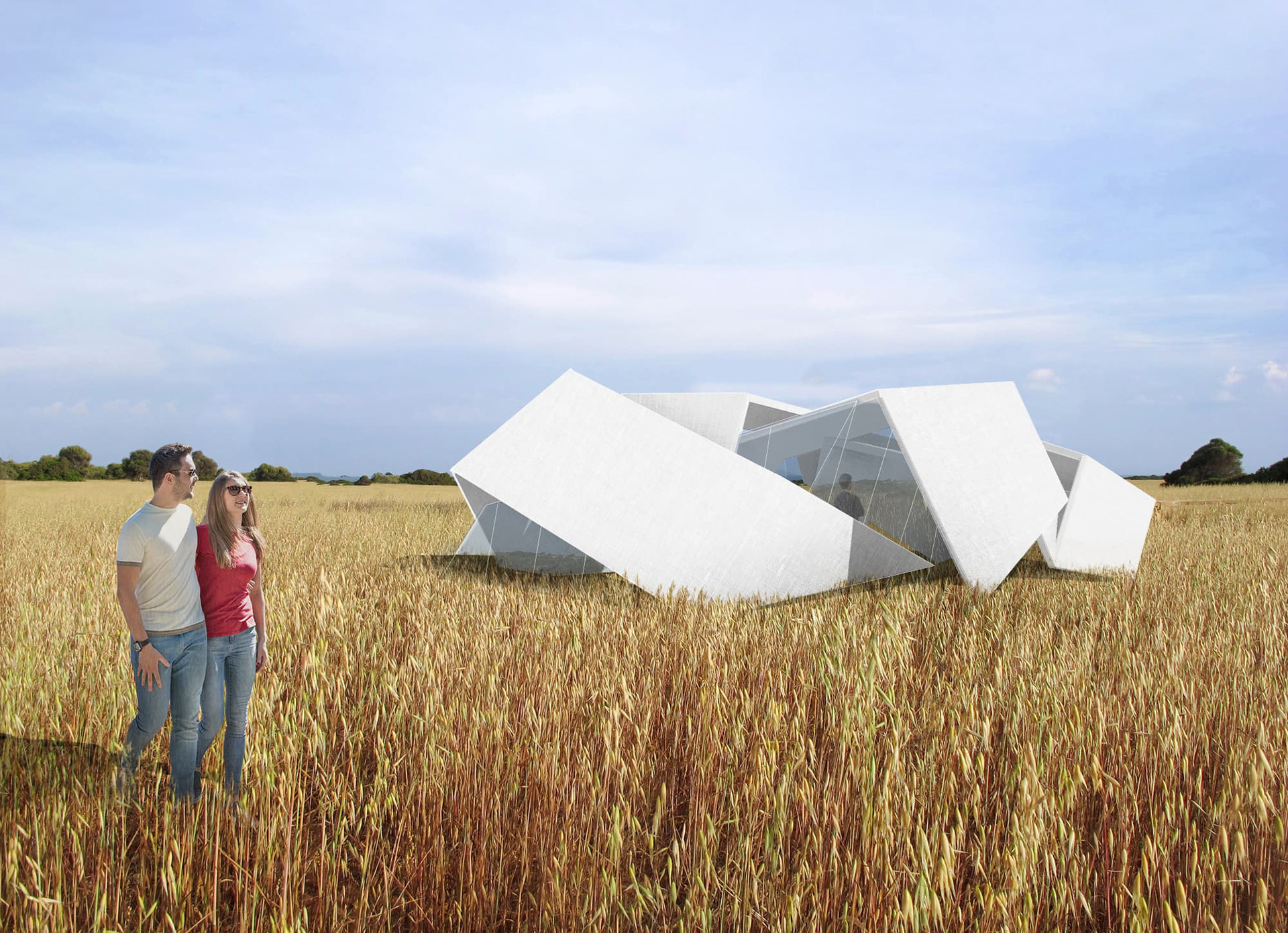
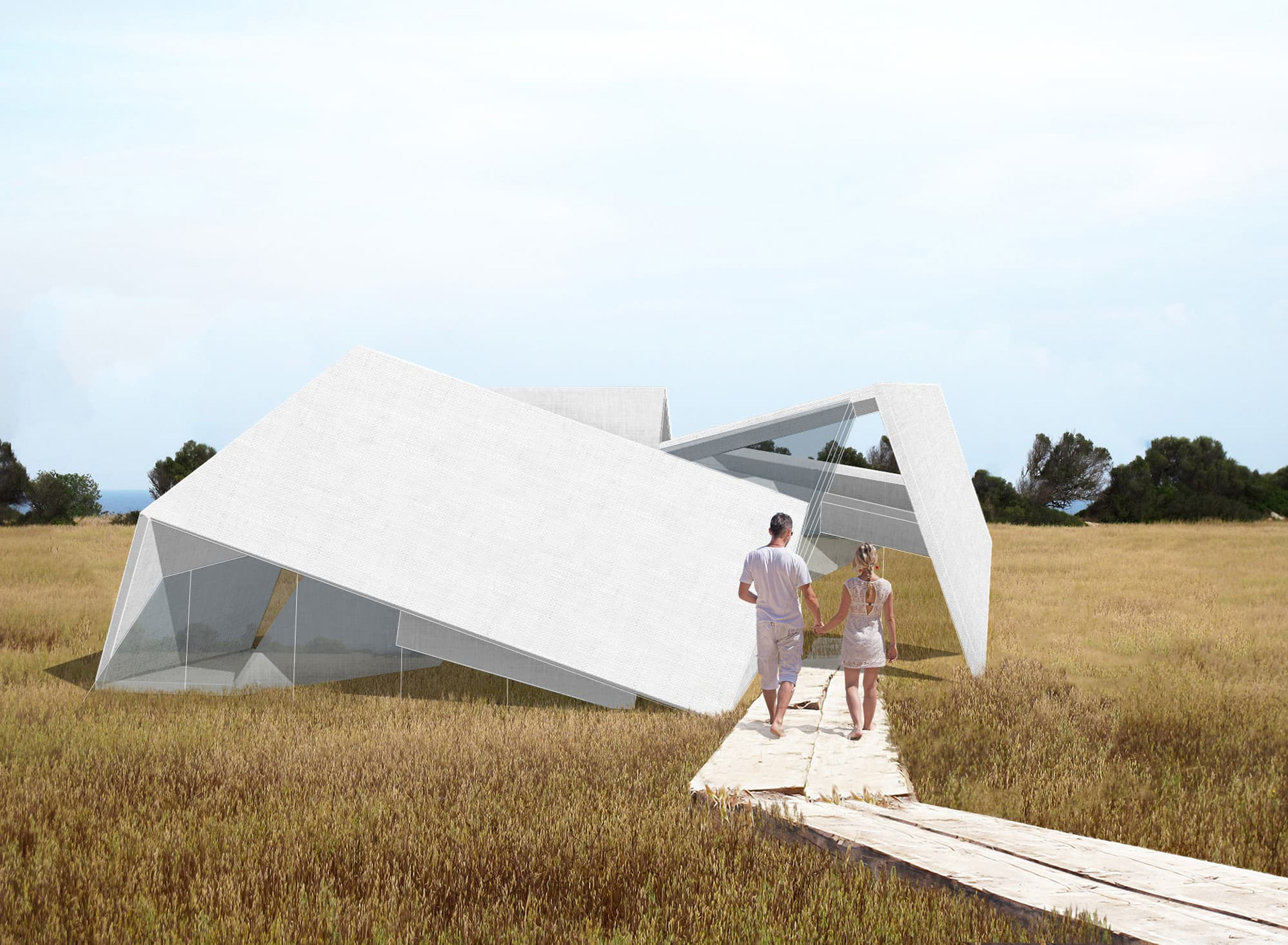
This academic pavilion explores the concept of antithesis through architecture, investigating the relationship between two seemingly opposing conditions: to see and to be seen. While these actions are often understood as opposites, they occur simultaneously. The moment where one observes others while knowing they are being observed. The project seeks to transform this reciprocal act of perception into a tangible spatial experience.
The pavilion is organised around two contrasting yet interconnected environments. The first, representing to be seen, is inward-looking and introspective. Enclosed and intentionally subdued, this space explores the growing role of technology in shaping perception and identity. Through the use of cameras, facial recognition software and interactive projections, visitors become both observer and observed. In contrast, the second space embodies to see. Here the architecture opens itself towards the surrounding landscape through a series of carefully framed views. Angular walls and controlled openings direct the gaze outward, encouraging visitors to engage consciously with their environment and the act of observation itself.
Between these two conditions lies a transitional zone where the distinction between observer and observed begins to dissolve. Through the manipulation of light, visitors experience moments of overexposure and underexposure that temporarily disrupt visual clarity. This intermediate space challenges the reliability of perception and draws attention to the mechanisms through which visual information is constructed and interpreted.
Although conceived as an academic exploration, the pavilion addresses questions that have become increasingly relevant in contemporary society. In an age shaped by digital media, biometric technologies and constant connectivity, the boundaries between observation, participation and exposure have become increasingly blurred. The project uses architecture as a medium to examine these evolving relationships, transforming abstract ideas about perception, visibility and identity into a physical and immersive experience.
location: eindhoven, the netherlands
type: academic project
program: exhibition space
area: 62sqm
tutors: arch.avb andre walraven, prof.ir. jan westra
recognition: best of class 2009