This academic project explores the relationship between dwelling, work and food production within the urban context of Xochimilco, Mexico. Inspired by the traditional hacienda, where domestic life and economic activity exist as part of an integrated whole, the proposal reinterprets this historical model for a contemporary extended family living within a dense urban environment.
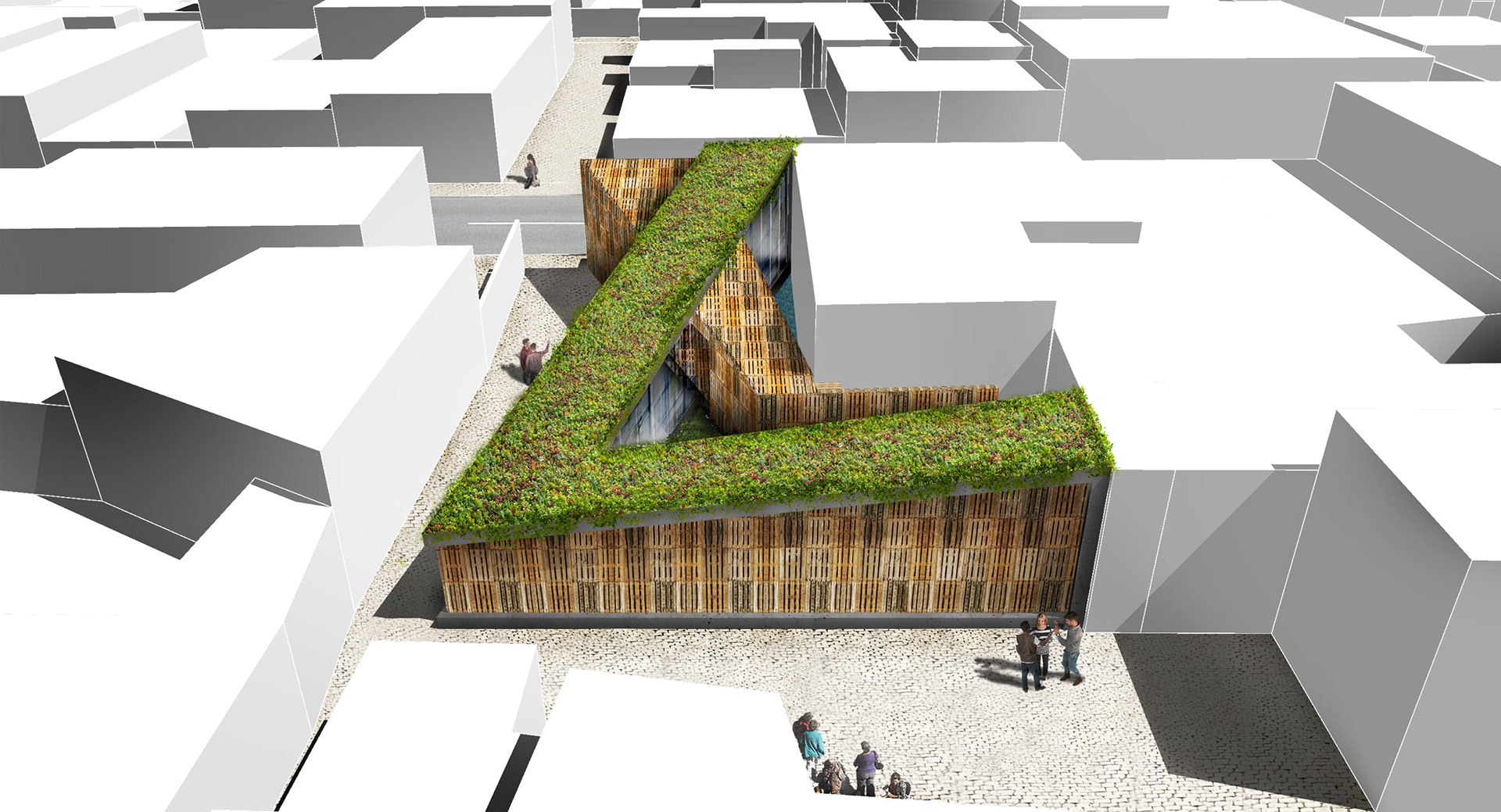
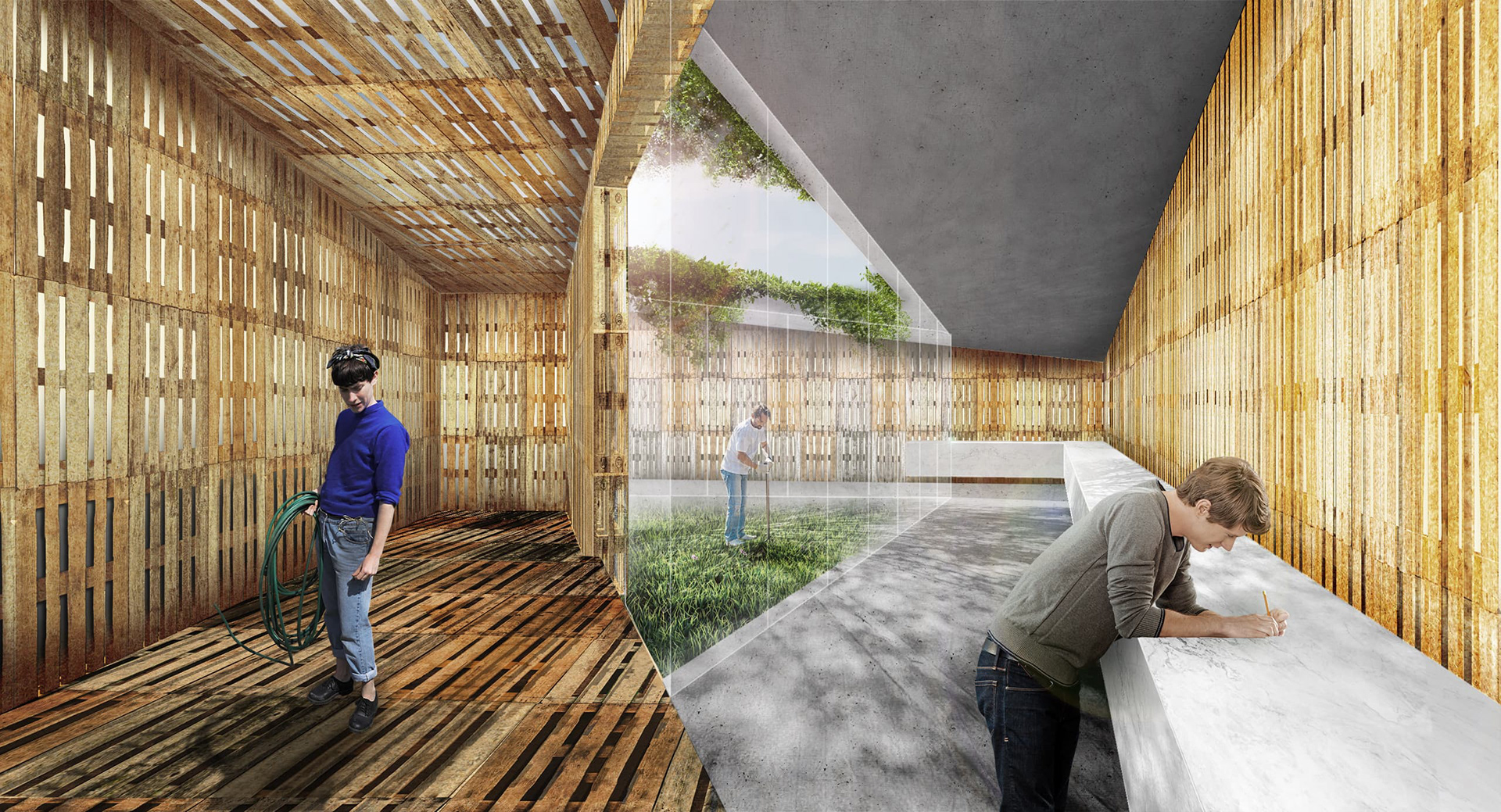
Architecturally, the building is conceived as a continuous inhabited landscape. A gently sloping green roof becomes part of a productive agricultural environment, providing space for crop cultivation and livestock. Beneath this elevated surface, the private living spaces are organised around a central courtyard.
A wedge-shaped commercial space intersects the main living volume, creating a transition between the public realm and the domestic environment. This physical intersection allows economic activity, community interaction and private life to coexist within a single structure.
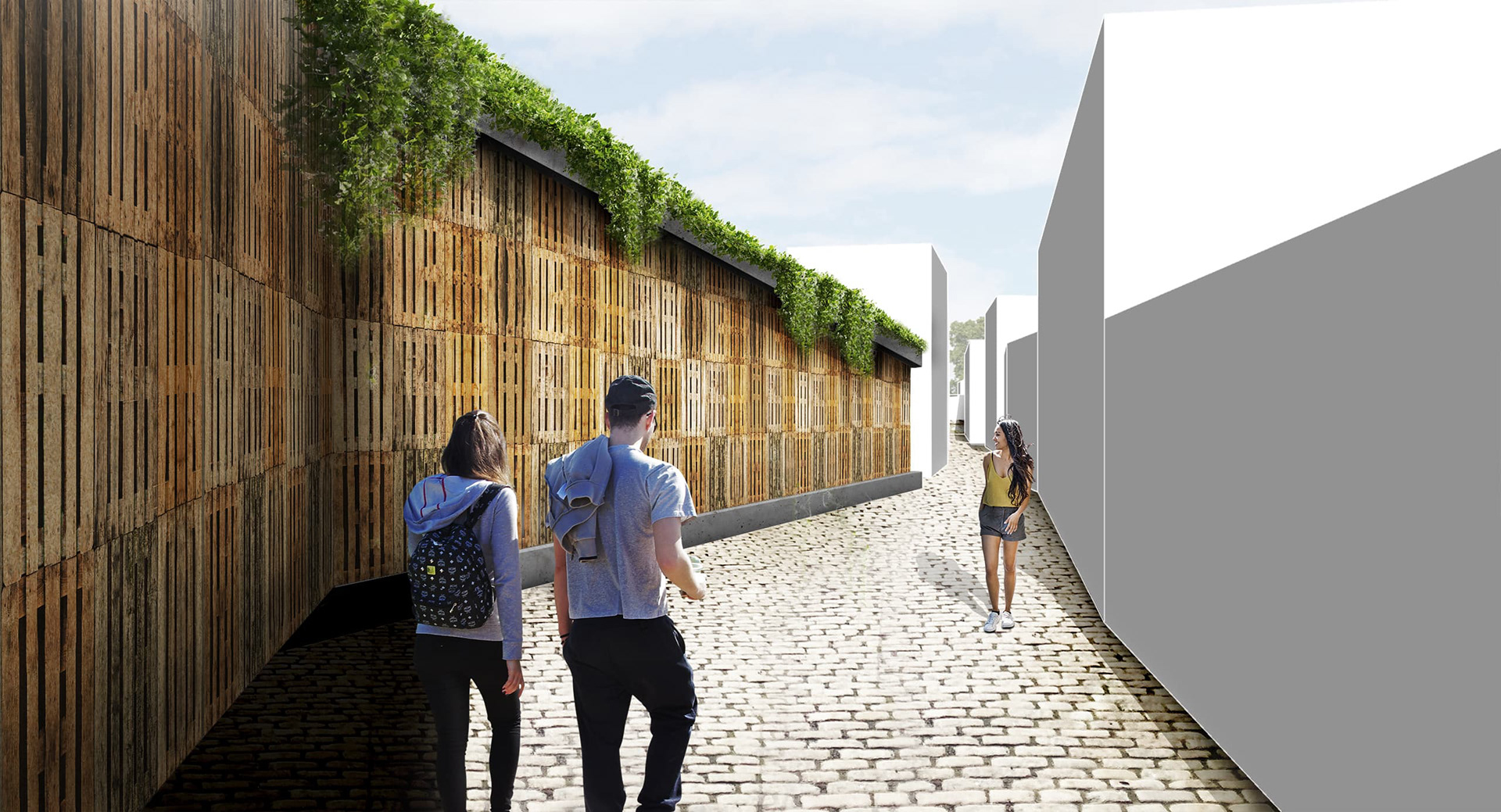
Material reuse also plays an important role in the proposal. In accordance with principles found in the historical Laws of the Indies, the building is conceived using reclaimed materials sourced from existing structures on the site. Glass façades are screened with reused timber pallets that filter light and views while mediating between public and private space. This layered envelope creates a changing visual relationship between inside and outside, reinforcing the project's broader ambition to blur conventional boundaries between architecture, landscape, work and dwelling.
Although developed as an academic exploration, the project investigates themes that remain highly relevant today: urban resilience, circular resource systems, local food production and the integration of living and working environments. By drawing on both historical precedents and contemporary challenges, the proposal reimagines the urban dwelling as a productive and self-sustaining ecosystem.
location: xochimilco, mexico
type: academic research project
program: residential and retail
area: 380sqm
tutors: jacob voorthuis, sjef van hoof
recognition: published in the architectural magazine dax (2010)