This academic project explores the adaptive reuse of the former Schellens textile factory. Throughout the factory, water played a fundamental role in textile production, from washing and treating fabrics to supporting the various manufacturing stages housed within the complex. Rather than approaching the project through a conventional programme-driven methodology, the design process sought inspiration from the behaviour characteristics of liquids.
The former water treatment room, once responsible for supplying the factory's operations, became the conceptual starting point for the project. Using paraffin poured into a physical scale model of the existing building, a series of experiments were conducted to observe how liquids naturally move, accumulate and occupy space within the architectural constraints of the factory. These resulting flow patterns formed the basis for the spatial organisation of the proposal.
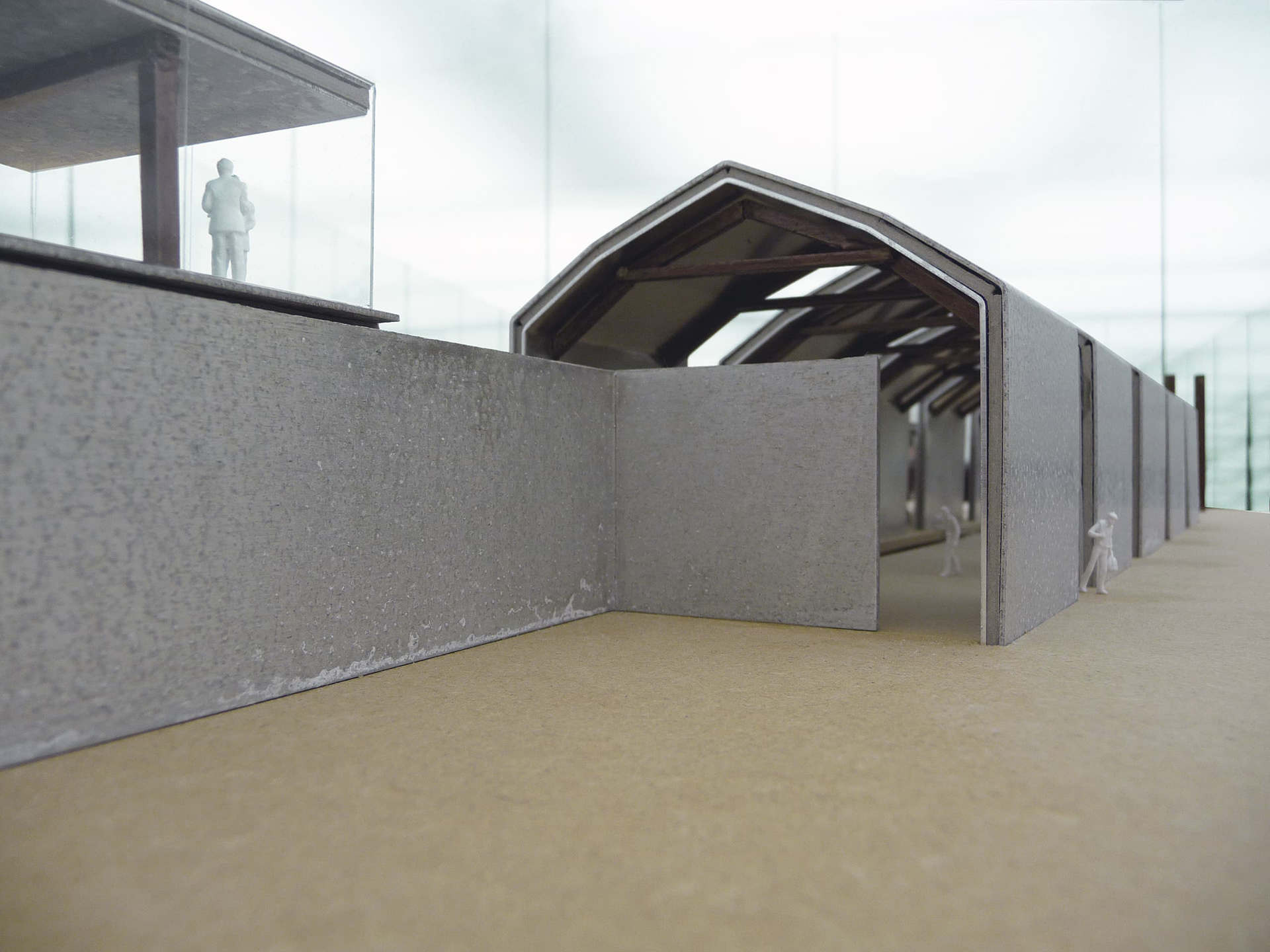
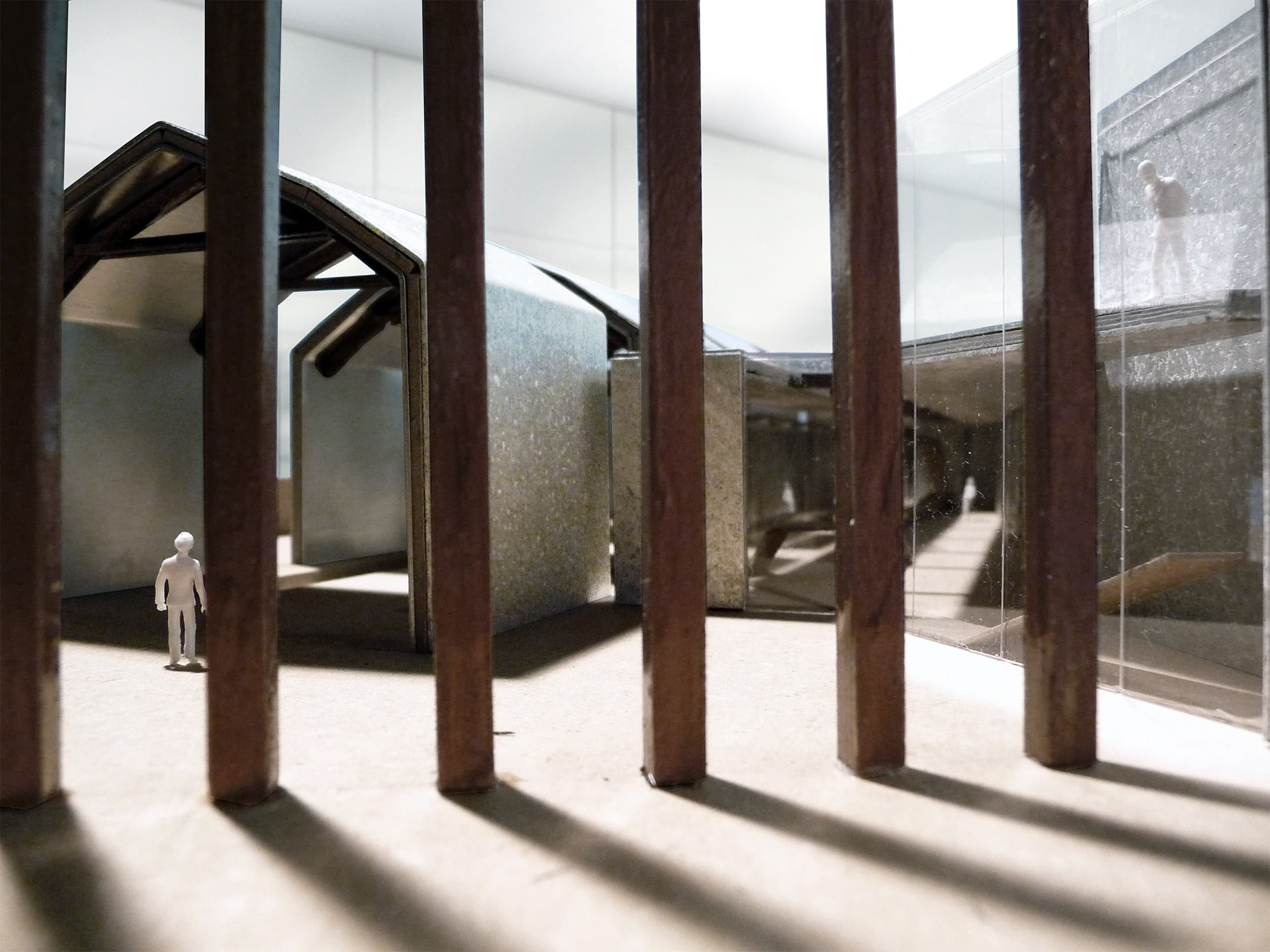
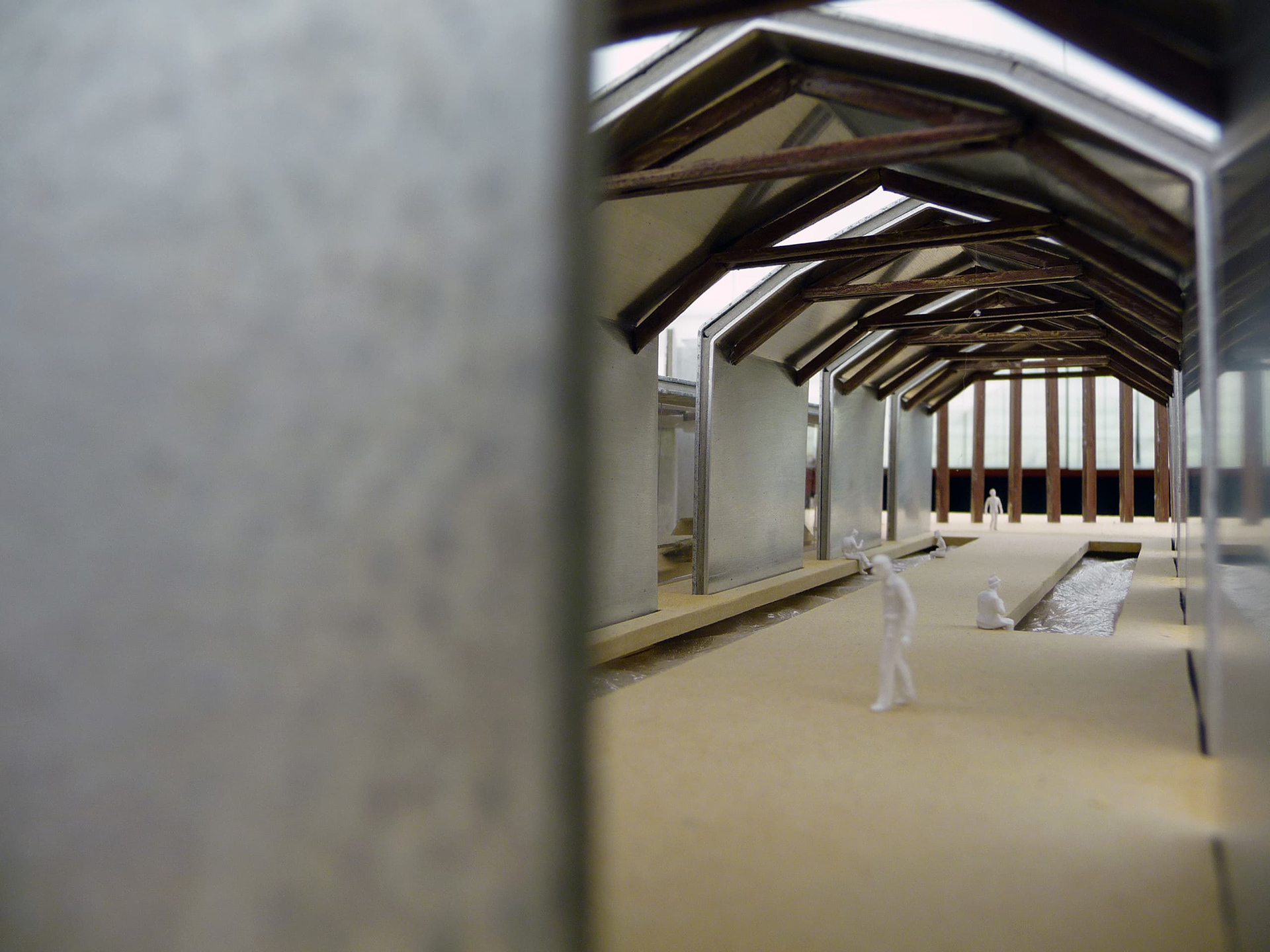
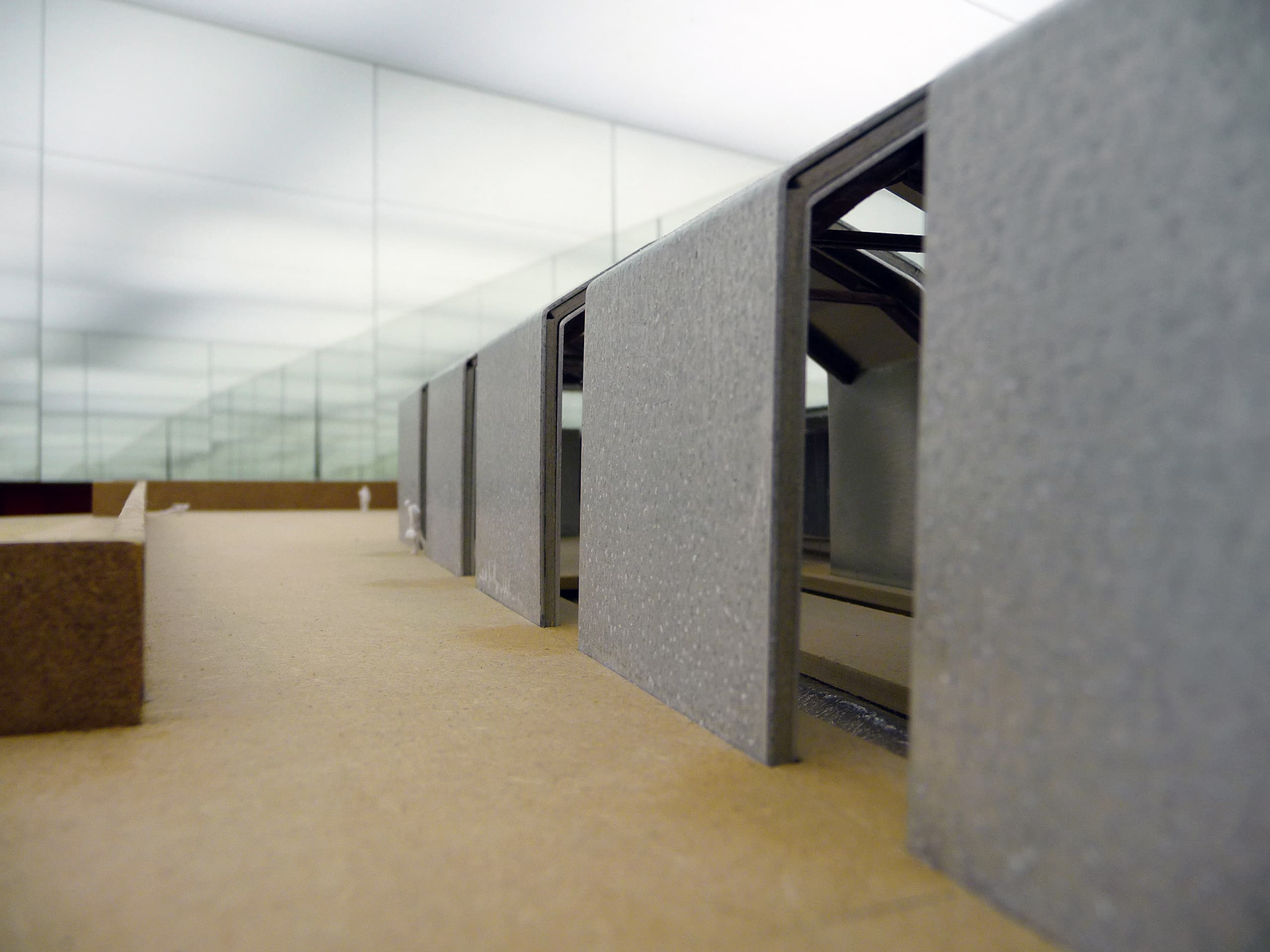
The generated geometries informed a new public programme centred around recreation, reflection and social interaction. At the heart of the proposal lies the former dye house, transformed into a central gathering space from which all major functions are accessed. Existing ventilation shafts and service voids are opened up, allowing light, movement and visual connections to flow through the building in a manner that reflects the original fluid-based design concept.
The former burling room is reimagined as a restaurant, providing a more intimate environment while maintaining a visual relationship with the surrounding public spaces. A dining area on the upper floor offers panoramic views across the Schellens factory complex, the Dommel River and the city of Eindhoven, reconnecting visitors with the industrial landscape that inspired the project.
location: eindhoven, the netherlands
type: academic project
program: office and retail
area: 1.640sqm
tutors: ir. jan schevers, ir. raplph brodruck
recognition: displayed at the dutch design week 2011