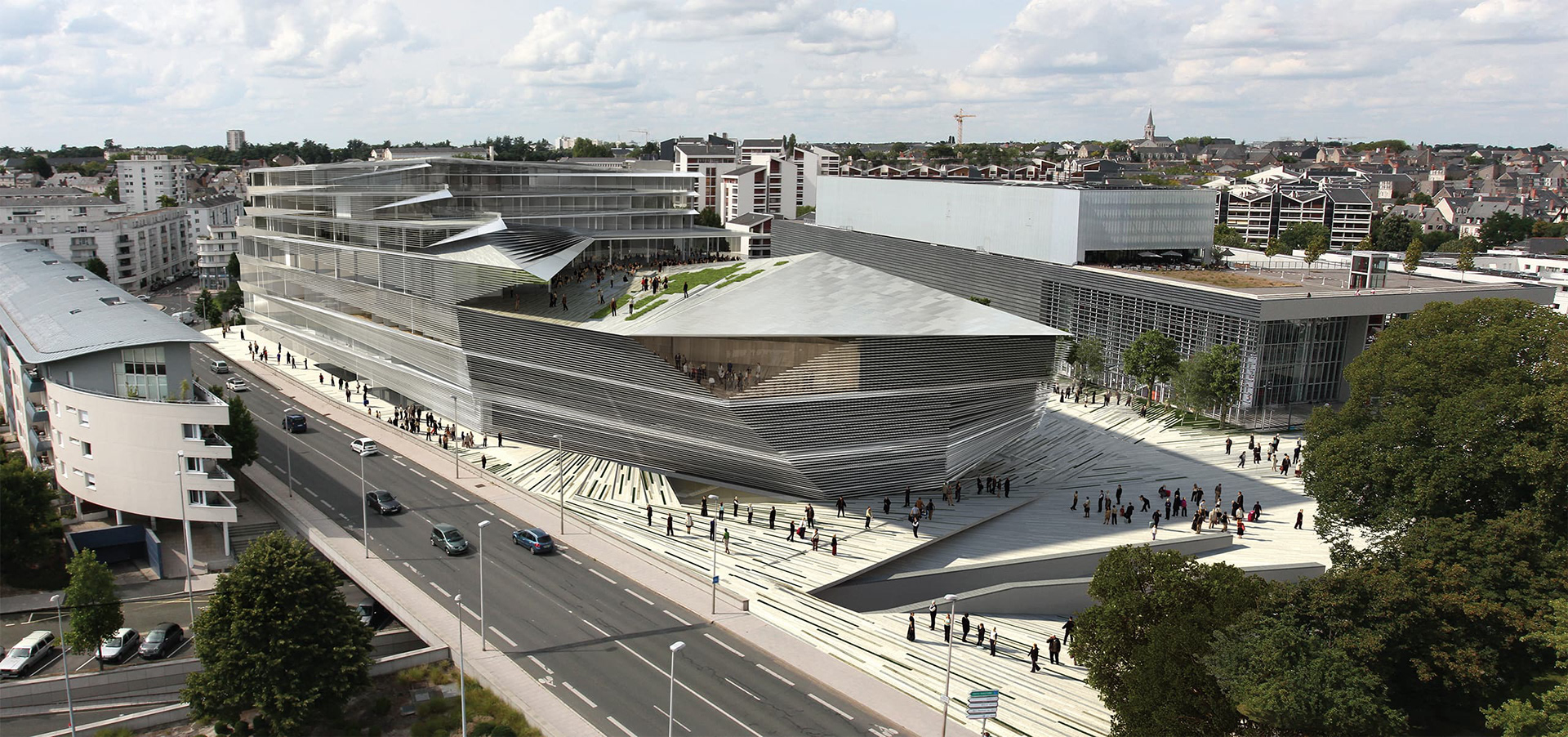
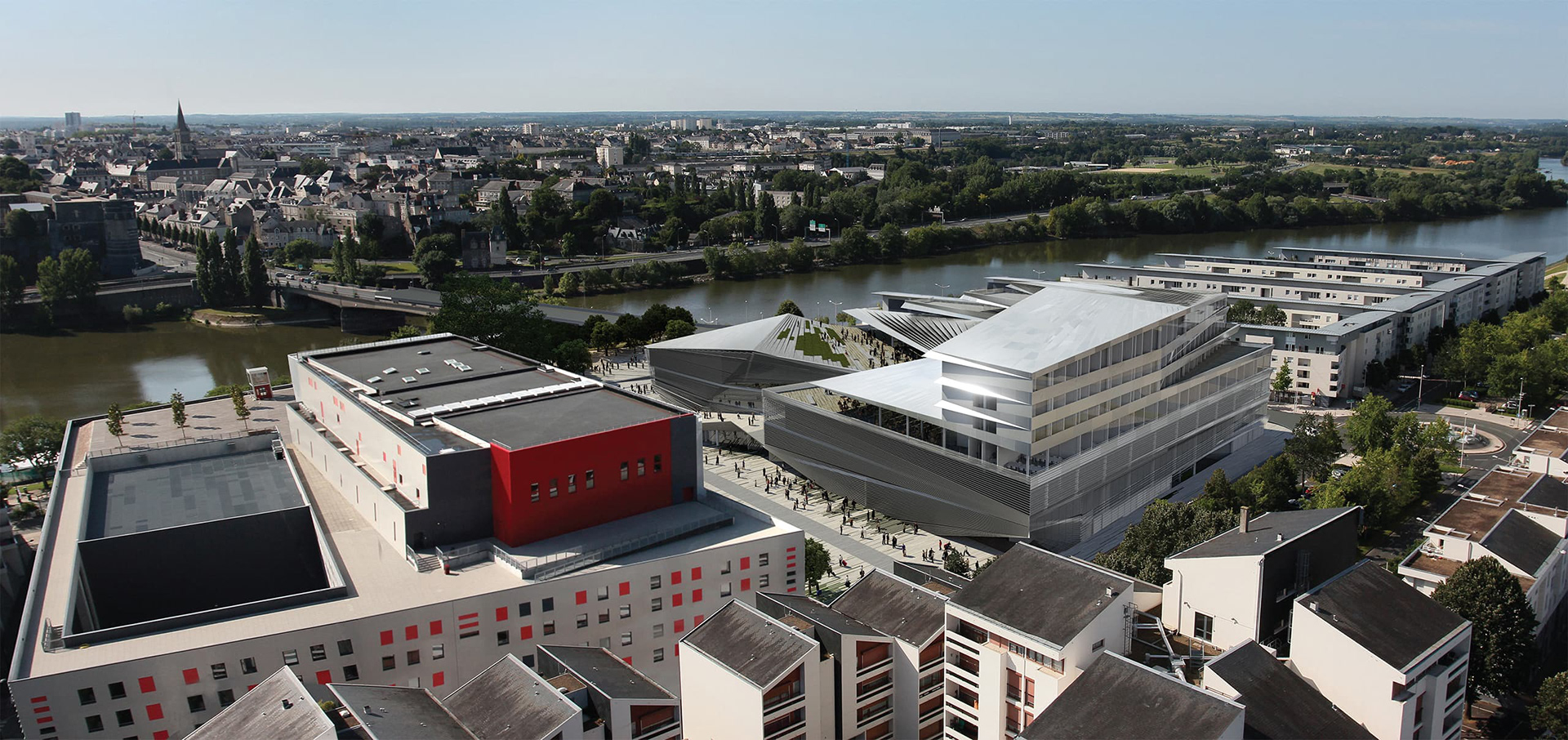
Although never realised, this proposal was developed as the winning entry for an international competition to design a new congress and cultural centre in Angers, France. Positioned along a prominent boulevard overlooking the Maine River, the project sought to strengthen the relationship between the historic city and its waterfront through a building that functioned as both destination and urban connector.
Inspired by the flowing movement of the adjacent Maine, the building adopts a spiralling configuration that invites pedestrians approaching from the boulevard, the city centre or the riverfront to enter, cross or occupy the building as part of their everyday journey. In this way, the congress centre becomes more than a venue for cultural events; it acts as an urban landscape that encourages movement, interaction and public engagement.
This relationship between city and river is further expressed through the façade. A series of horizontal metallic bands wraps around the building, filtering light and views while revealing glimpses of the activity within. Openings created within this layered envelope clearly mark entrances and circulation routes, reinforcing the building's role as a permeable civic destination.
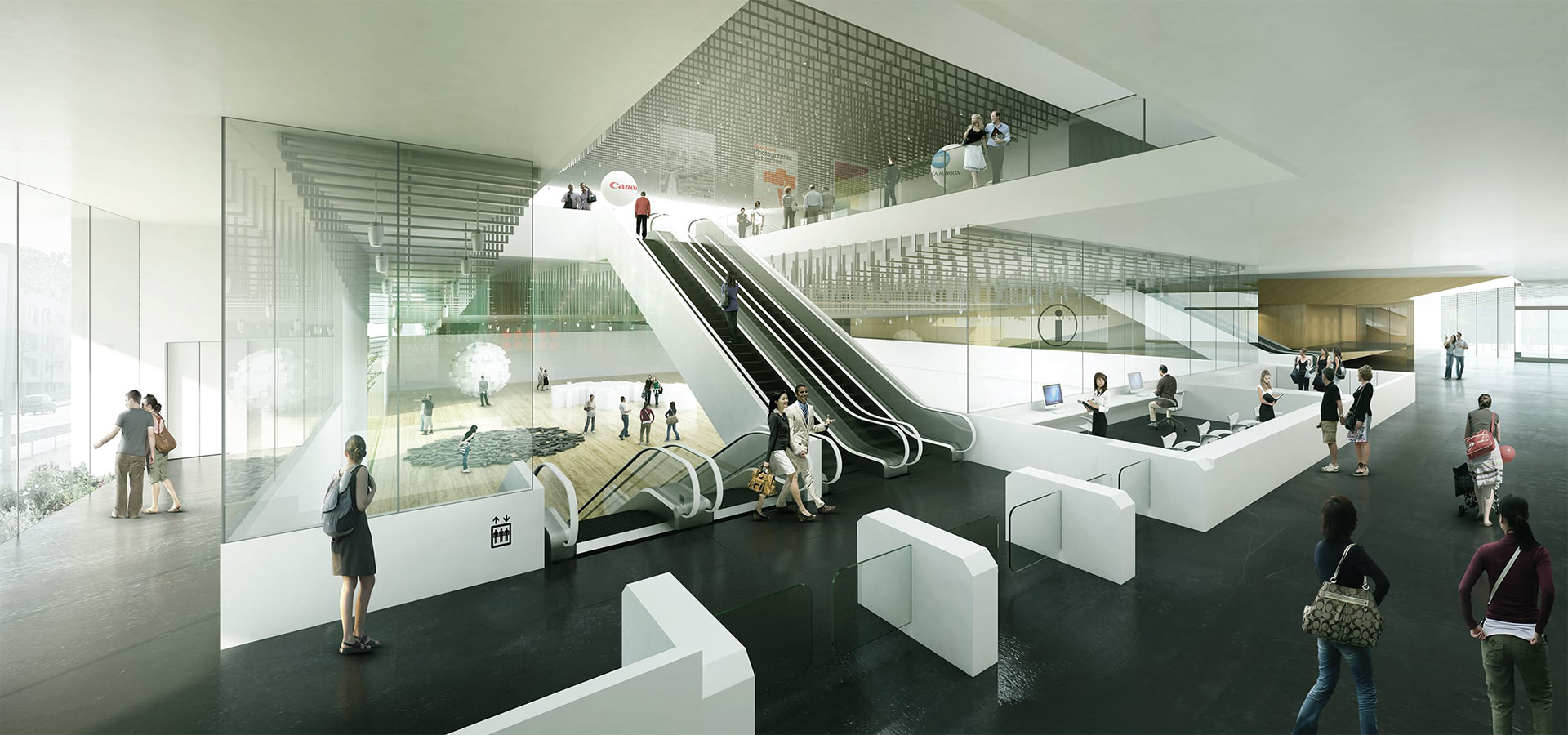
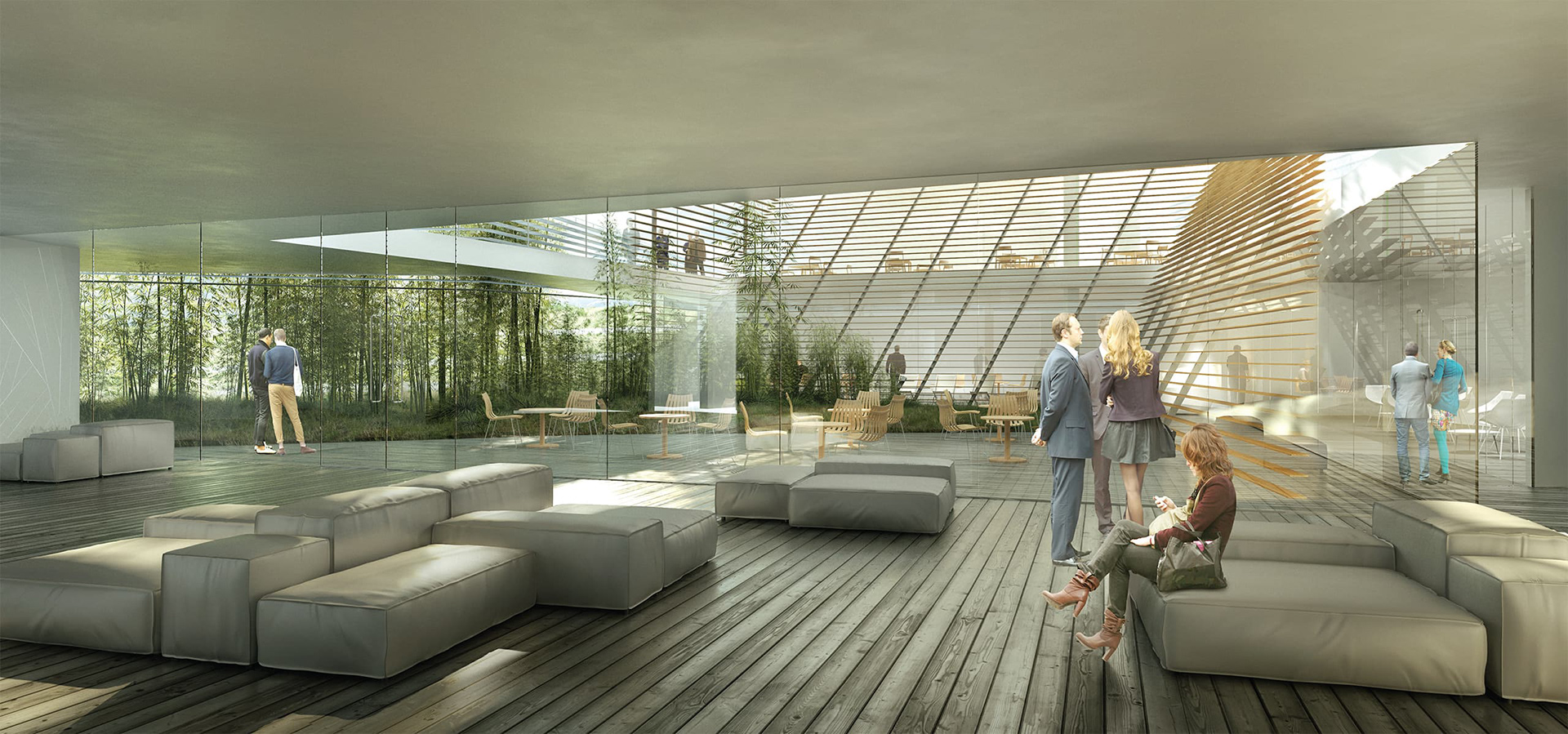
Internally, the spiralling concept is translated into a clear and rational organisation of programme. Slight rotations between floor plates create visual connections between levels and allow circulation spaces, foyers and event areas to overlap and interact. As visitors move through the building, the architecture gradually unfolds, revealing framed views of Angers and the surrounding landscape.
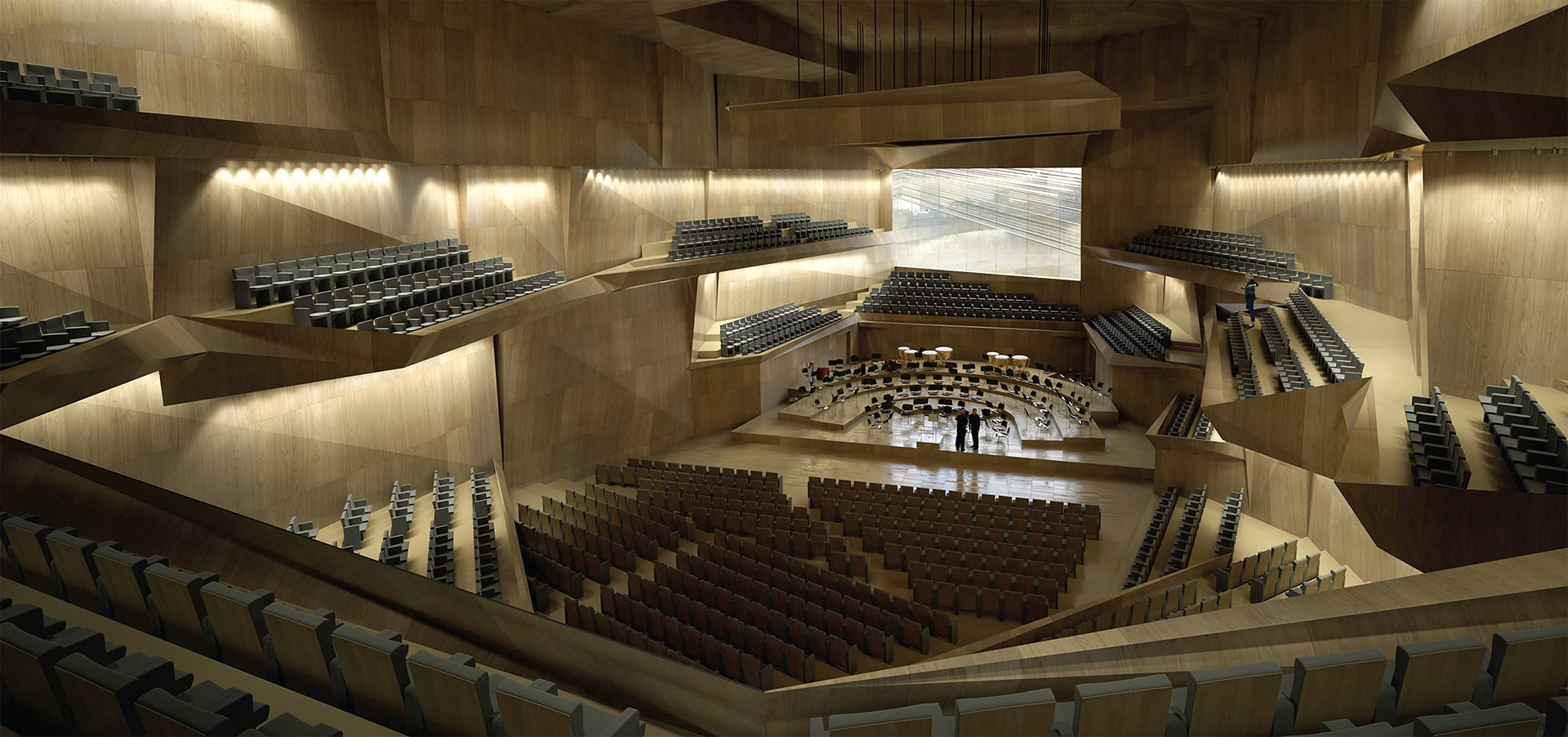
At the heart of the project lies the philharmonic hall. Here, the spiral transforms into an immersive interior landscape where visitors descend through a sequence of terraces, balconies and gathering spaces before arriving at the auditorium. Throughout this journey, carefully orchestrated views reconnect occupants with the city beyond, culminating in a final panorama of Angers before the performance begins.
location: angers, france
type: winning architecture competition
program: congress center and philharmonic
area: 25.200sqm
design team: kengo kuma, yuki ikeguchi, diego lópez arahuetes, miguel huelga de la fuente, jaime fernandez calvache, ryota torao, kazuyo nishida, kimio suzuki, nicola maniero, leroy merks, will lambeth, juan pablo azares, lucile dugal, christopher dowds, seung ik cha, arielle assouline
local architect: frederic rolland architects
status: cancelled (2014)
awards: winning scheme
services: architecture, interior design